
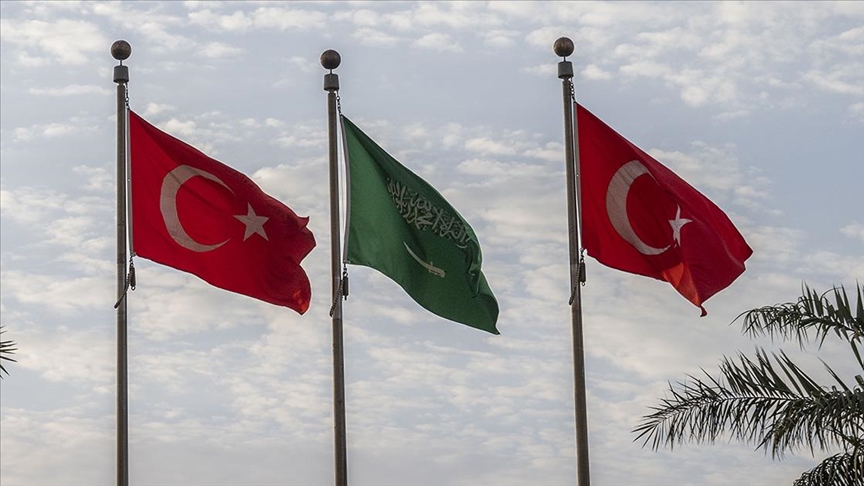

The meeting held approximately two weeks ago between President Recep Tayyip Erdoğan and Saudi Crown Prince Mohammed bin Salman yielded outcomes aimed at enhancing bilateral cooperation across multiple sectors, while also producing critical decisions regarding regional cooperation. These developments signal a renewed momentum in Türkiye-Saudi Arabia relations, particularly in the fields of energy and security.
The ongoing Iranian crisis, the United States’ search for possible intervention strategies against Iran, and Israel’s expansionist actions in the occupied Palestinian territories are among the key factors that have brought Türkiye and Saudi Arabia closer together. In this context, one of the most prominent outcomes of the meeting was the discussion on establishing joint security mechanisms to address regional security crises.
Regarding the Iranian issue, both Türkiye and Saudi Arabia clearly oppose direct military intervention. A potential intervention against Iran would generate significant security vulnerabilities and trigger increased Iranian military activity across the region. On this matter, both countries appear to share a common strategic perspective. The creation of bilateral security mechanisms aimed at preventing the outbreak of a regional war would therefore constitute a critical step in strengthening this partnership. This initiative represents one of the most important developments in reinforcing bilateral cooperation.
Israel’s decision to designate lands in the West Bank as state property is another issue jointly opposed by both countries. Saudi Arabia remains firmly committed to the establishment of a Palestinian state based on the 1967 borders, a position that further aligns Riyadh with Ankara and serves as an additional factor bringing the two countries closer together.
Another major outcome of the meeting concerned Saudi Arabia’s planned energy investments in Türkiye. It was confirmed that Saudi Arabia will invest approximately $2 billion in renewable energy projects in Türkiye. As is well known, Türkiye has been actively pursuing efforts to reduce its external energy dependency through exploration activities in the Black Sea, Gabar, and Somalia. In this framework, Türkiye has expanded its energy fleet with seismic research and drilling vessels, while simultaneously advancing the construction of the Akkuyu Nuclear Power Plant in cooperation with Russia. Once operational, Akkuyu is expected to meet approximately 10 percent of Türkiye’s electricity demand. Furthermore, natural gas discoveries in the Black Sea currently supply gas to around four million households.
Türkiye has also accelerated its energy exploration activities by establishing partnerships with major international companies such as BP and Chevron, enabling faster and more technologically advanced operations. In addition, plans for new nuclear power plants are ongoing, while LNG imports from the United States are set to increase. These developments underscore Türkiye’s comprehensive energy strategy and its ambition to become a regional energy hub. By reducing its external dependency, Türkiye aims not only to function as a transit country but also to become a price-setting actor in energy markets, positioning itself at the intersection of major energy corridors.
In the field of renewable energy, Türkiye has significantly strengthened its capacity in solar and wind power in recent years. Compared to European countries, Türkiye now occupies a notable position in renewable energy production and continues to expand its investments. The objective of ranking among Europe’s top three renewable energy producers represents a major step toward reducing energy dependency.
Within the framework of Saudi Arabia’s Vision 2030, the Kingdom aims to generate 50 percent of its energy directly from renewable sources. This strategy involves reducing the share of oil while allocating substantial resources to solar, wind, and green hydrogen projects. These investments are planned within a global energy logistics vision, indicating that Saudi Arabia’s planned investments in Türkiye are part of a broader strategic framework. Moreover, Saudi Arabia has rapidly advanced in renewable energy technologies, further enhancing the strategic value of this partnership.
The investments planned in Türkiye are particularly significant in economic terms. Türkiye is expected to purchase electricity generated from these projects at a highly competitive rate of 1.99 euro cents per kilowatt-hour. With a total capacity of 5,000 megawatts, these projects represent a substantial contribution to Türkiye’s renewable energy targets. The projects will be implemented in Sivas and Karaman, reflecting an investment strategy that extends into Anatolia and supports regional development. Companies operating in the renewable energy sector will directly benefit from these investments, which will also generate significant employment opportunities.
Energy partnerships, in turn, pave the way for deeper cooperation in the security domain. Türkiye’s defense industry, which has risen to a higher league in recent years, represents a key area where this partnership is expected to further solidify. Türkiye has proven the effectiveness of its defense systems on the regional level, making this cooperation particularly attractive for Saudi Arabia.
In 2023, the two countries signed the largest defense and aviation agreement in the history of the Republic of Türkiye, specifically concerning the AKINCI unmanned combat aerial vehicle. This agreement opened the door to further cooperation, including technology transfer and joint production. From Saudi Arabia’s perspective, this partnership significantly strengthens its defense capabilities. Joint production initiatives within Saudi Arabia are already on the agenda, with a memorandum of understanding signed for the joint production of the GÖKBEY helicopter.
More notably, recent statements by President Erdoğan highlighted ongoing efforts toward joint production of KAAN, Türkiye’s fifth-generation fighter aircraft. This cooperation holds immense strategic value for both countries, particularly in terms of cost-sharing and financial sustainability. It also carries broader regional significance by reducing dependency on Western defense suppliers and enabling the emergence of new defense partnerships. Through this collaboration, KAAN has the potential to evolve into a globally recognized standard.
In conclusion, the deepening partnership between Türkiye and Saudi Arabia is expected to generate significant developments across trade, energy, and defense industries. By transforming their cooperation into a structured power system, both countries can establish a more effective and sustainable regional partnership. When compared to past periods of stagnation, current relations indicate the beginning of a “golden era” in bilateral ties. Security partnerships grow through mutual trust and shared interests, and Türkiye-Saudi Arabia relations now represent a critical and closely monitored area in shaping the future security architecture of the region.
Photographs: Anadolu Agency