
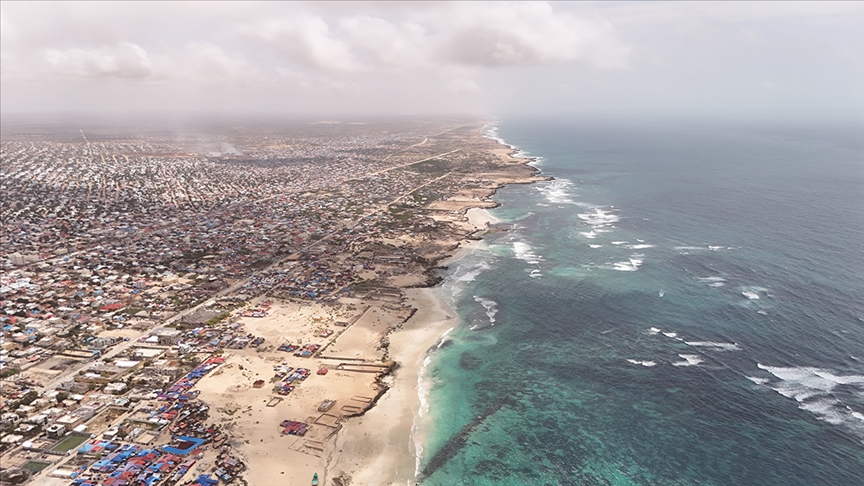

Israel’s recognition of Somaliland, located in northern Somalia and regarded by the international community as an integral part of Somalia, as an independent state has reopened debates over the long-fragile geopolitical balance in the Horn of Africa. This decision has been evaluated not only as a challenge to Somalia’s sovereignty and territorial integrity, but also as a move that contravenes the African Union’s principle of the inviolability of borders and the fundamental norms of international law. Türkiye’s response to this development reflects the multidimensional strategic partnership it has established with Somalia in recent years, as well as its long-term foreign policy vision for the Horn of Africa.
On 30 December 2025, the President of Somalia paid an official visit to Türkiye and held a meeting with President Recep Tayyip Erdoğan. At the joint press conference following the meeting, it was explicitly stated that the preservation of Somalia’s unity and territorial integrity under all circumstances constitutes a priority for Türkiye. Türkiye described Israel’s decision to recognize Somaliland as illegitimate and emphasized that such steps would undermine peace, stability, and state-building processes in Somalia. Israel’s move also triggered strong reactions within Somali public opinion, prompting the Mogadishu administration to call on the international community to support Somalia’s sovereignty and territorial integrity. In this context, the meeting and statements made with Türkiye can be considered a significant source of diplomatic support for Somalia.
Türkiye’s stance in this process should not be viewed as limited to diplomatic rhetoric alone. Türkiye has long maintained a military, security, and development-oriented presence in Somalia, positioning itself as one of the most important strategic partners of the Mogadishu government. The Turkish military training base in Mogadishu plays a critical role in building the capacity of Somali security forces, while agreements signed in the fields of defense, maritime security, and energy demonstrate that bilateral relations are grounded in an institutionalized and long-term framework. From this perspective, Israel’s recognition of Somaliland represents not merely a diplomatic crisis for Türkiye, but also a new challenge confronting its Somalia-centered regional strategy.
Looking ahead, Türkiye’s policy in the Horn of Africa is likely to evolve along three main axes. First, Türkiye is expected to reinforce its position on defending Somalia’s territorial integrity through stronger and more multilateral diplomacy, pursuing a more active diplomatic line in international platforms such as the African Union, the Organization of Islamic Cooperation, and the United Nations in support of Somalia. Second, the Türkiye–Somalia strategic partnership is likely to deepen further. Israel’s move has heightened the strategic significance of Türkiye’s military, security, and economic presence in Somalia, strengthening Ankara’s inclination to consolidate its existing gains rather than retreat from the region. In this regard, President Erdoğan’s statement at the joint press conference that a new drilling vessel would operate off the coast of Somalia can be seen as a concrete indication of this tendency. Third, amid increasing competition among external actors in the Horn of Africa, Türkiye is expected to continue positioning itself as an actor that promotes stability and supports legitimate governments. This approach aligns not only with Somalia-specific objectives but also with broader regional goals of strengthening state capacity, preserving the legitimacy of central authorities, and limiting conflict dynamics across the Horn of Africa.
In conclusion, Israel’s recognition of Somaliland should be interpreted not as a rupture in Türkiye’s policy toward Somalia and the Horn of Africa, but rather as a development that may lead to the continuation of its existing policy line in a clearer and more resolute manner. Türkiye regards the defense of Somalia’s unity and territorial integrity not only as a matter of bilateral relations, but also as a requirement of regional stability and the principles of international law. This perspective is likely to remain a fundamental determinant of Ankara’s approach to the Horn of Africa in the period ahead.
References
Anadolu Ajansı (AA), “Cumhurbaşkanı Erdoğan ve Somali Cumhurbaşkanı Mahmud ortak basın toplantısı düzenledi.” , https://www.aa.com.tr/tr/pg/foto-galeri/cumhurbaskani-erdogan-ve-somali-cumhurbaskani-mahmud-ortak-basin-toplantisi-duzenledi
BBC Türkçe, “ Erdoğan: ‘İsrail’in Somaliland’ı tanıma kararı gayri meşrudur’” , https://www.bbc.com/turkce/articles/cq8d8w3j32po
T.C. Cumhurbaşkanlığı İletişim Başkanlığı, “ Cumhurbaşkanı Erdoğan: “Somali’nin birlik ve bütünlüğünün her şart altında muhafazası bizim için öncelikli meseledir”, https://www.iletisim.gov.tr/turkce/haberler/detay/cumhurbaskani-erdogan-somalinin-birlik-ve-butunlugunun-her-sart-altinda-muhafazasi-bizim-icin-oncelikli-meseledir
Photograph: Anadolu Ajansı