

Having declared its independence in 1776 with the Declaration of Independence, the United States of America (USA) continued its struggle for independence until 1783. Although it took measures to protect itself from internal wars in Europe, it did not stay away from Europe entirely and continued trade. From the first President, George Washington, onwards, American administrators were careful to keep America away from European politics. This policy is called “The Isolation Policy”. Upon the message of President James Monroe, this policy was approved in the American Congress on December 2, 1823, under the name Monroe Doctrine.
The USA’s close contact with the Ottoman Empire, following Europe, began with a treaty made in the 19th century and has reached the present day through periods of balance policies.
First Contact (1800): The first US visit to the Ottoman Empire occurred during the time of George Washington, via a frigate on November 9, 1800.
Treaty of Navigation (1830): After the Ottoman fleet was sunk by Western allies at Navarin in 1827, Sultan Mahmud II, believing he should not trust Western powers, signed the Treaty of Navigation and Commerce (Seyr-i Sefain) with America. One article of the treaty stated that American citizens living in the Ottoman Empire would benefit from capitulations and privileges. This article caused both political and social problems in the Ottoman Empire over time.
Following the agreement, missionary schools and consulates were opened by the US on Ottoman soil. Although relations were generally commercial, the US conducted missionary activities and opened Protestant schools. Taking advantage of the Tanzimat and Reform Edicts, they added new ones to these schools. When the missionary work carried out by American churches through the “American Board of Commissioners for Foreign Missions” began to influence the Greeks and Armenians living within Ottoman borders, the Sublime Porte (Ottoman Government) wanted to inspect these activities starting from the 1860s. Later, fearing that they would awaken national consciousness in non-Turkish elements and finding that they supported Armenian uprisings, the Ottoman state wanted to close American schools. This led to disputes between the US and the Ottoman Empire that lasted until World War I.
The Ottoman-Russian War of 1877-1878 (known as the 93 War) resulted in a heavy defeat for the Ottomans. At the end of this war, the Treaty of Berlin was signed, which included articles regarding the ‘Armenian Question’ and the Kurdish issue that persist to this day. Following this, external pressures on the Ottoman Empire increased. The US Congress, acting on the idea of religious unity, took Armenians under protection and demanded greater protection of Armenian rights against the Ottomans.
In the 20th century, specifically in 1909, American Colonel Chester presented the Chester Project regarding railways and mines to the Turkish parliament. The aim was To open railway lines supplementary to the Baghdad railway and obtain mining concessions in the areas of these lines. This plan was later seen as a support move desired for the benefit of the Turkish State for the Lausanne Peace Treaty, and an agreement was signed in 1923. However, when support for Lausanne did not come from the US, the agreement was canceled. During World War I, European states signed secret treaties among themselves to partition the Ottoman Empire. The course of the war changed with America’s entry. Consequently, President Woodrow Wilson published a 14-point declaration on January 8, 1918, to determine peace principles (Wilson Principles). According to this declaration, sovereignty would be ensured in regions of the Ottoman Empire with a Turkish majority, and economic sanctions would not be applied.
After publishing the Wilson Principles in 1918, the US returned to its policy of isolation but continued trade with Türkiye. World War II shifted power balances. While European powers wanted to draw Türkiye into the war, the US initially remained neutral but ramped up armaments against threats in the Pacific (Pearl Harbor) and eventually entered the war.
For this purpose, in 1941, the US accepted the Lend-Lease Act by passing it through its senate. It provided military aid to England. During the war, Japan threatened and attacked America; after being subjected to the Pearl Harbor raid, the USA responded to Japan with the Midway air attack and actively participated in the war. Due to this situation, it expanded the law with the authority to lend, lease, and exchange. Roosevelt, who had mentioned such a bill to Refik Saydam before the announcement of the law, stated that Türkiye could also benefit from this law. When aid was not provided to Türkiye, which requested weapon aid during the war, England reported the situation to the USA and demanded that weapon aid should be provided to Türkiye from the USA. Upon this, the USA accepted this request by stating that they would support protecting Türkiye’s territorial integrity. Thereupon, the agenda at the Cairo Conference gathered during the war became Türkiye. Meeting with İsmet İnönü, Roosevelt and Churchill stated that they requested bases from İnönü regarding Türkiye’s entry into the war. Despite all conferences held during the war, Türkiye did not actually enter the war.
After the Second World War, Soviet Russia and the United States of America, as two effective powers, began to be effective on world politics and economy. Wanting to say stop to Soviet Russia’s expansionist policy in the Middle East, Balkans, and Europe and its idea of spreading communism, the USA introduced economic policies to the market under the name of the Truman Doctrine first, and then the Marshall Plan. At the foundation of the Truman Doctrine lies the fear of Soviet expansion. The doctrine was accepted on March 12, 1947, with President Truman reading the declaration. The occurrence of a civil war in Greece in the same years caused the Greek economy to be damaged. Truman acted with the thought that Soviet Russia had taken Greece under its influence, and thinking that Soviet Russia would take Türkiye under its influence with the same policy, it was foreseen that economic support would be given to Greece and Türkiye by the USA. Truman aid began on May 22, 1947.
The European Recovery Program, known as the Marshall Plan, started on July 12, 1947, with a conference gathered in Paris with the participation of 16 states. The basic aim in the project was to bind Europe to itself so that food aid would not be taken from outside and shopping would not be done with foreign credits. The conference working under the name Committee of European Economic Cooperation (CEEC) prepared the report of the states in need and sent it to the US government. Thus, this plan began to be implemented in the period between 1947-50.
With the Democrat Party coming to Türkiye’s administration in 1950, relations with the USA increased further. Although temporary benefit was provided to the Turkish economy with the received Marshall aid, in return, the right to extraction and use of mines and oils found in Türkiye was given to America. In 1950, Türkiye declared its wish to join NATO and subsequently participated in the Korean War by taking place beside the United States of America. Türkiye, whose main aim was to become a member of NATO, recorded progress in its relations with the USA. At the same time, the construction of the Incirlik Air Base, whose construction was carried out jointly with America, started in Adana in 1951, and the base was opened to service in 1954. Türkiye, which entered NATO in 1952, also became a founding member of the Baghdad Pact (CENTO) signed in 1955. After the Incirlik Air Base, Türkiye allowed the USA to place Jupiter missiles on its lands in 1959. After joining the Council of Europe and NATO, Türkiye wanted to join the European Economic Community established in 1957. On June 25, 1963, Türkiye was accepted into this community.
When the 1960s were reached, terror activities of Greeks against Turks occurred in Cyprus. Upon this, Türkiye landed soldiers on the island of Cyprus with the title of guarantor state. President Johnson displayed a harsh attitude regarding Cyprus, sending a letter to İnönü and giving him a note. In the letter, he emphasized that if an intervention was to be made, allies should also be consulted here, and correspondence started between the two states. This correspondence process is known as the Johnson Letters. With Türkiye approaching Soviet Russia in 1968, anti-American student movements emerged in Türkiye. America’s embargo and capitalist practices were protested. Opium cultivation, which Türkiye banned in 1971 under US pressure, was released [permitted] in 1974. Following the year 1974, when Türkiye made a landing on Cyprus with weapons bought from America in NATO, this time in 1975 the USA applied an arms embargo to Türkiye, and the prime minister of the period, Bülent Ecevit, ended the Turkish-American Treaty signed in 1969 and closed the Incirlik Base to the USA until it lifted the embargo in 1978. When the 1980s were reached, the USA provided debt postponement aid to support Türkiye’s transition to the free market, and in 1980 the Defense Cooperation Agreement was signed between Türkiye and the United States of America. A resource transfer of 13 billion dollars was made to Türkiye.
The Gulf War, which started in 1990, became a turning point bringing Türkiye and the United States of America face to face again. Türkiye, which remained neutral in the Iran-Iraq wars experienced in the 1980s, declared its neutrality again due to its political relations with Iraq. This situation caused a crisis and the following expressions were included in the General Assembly Meeting held in the Grand National Assembly of Türkiye:
“Developments closely concerning Türkiye are occurring in the world and our environment. The events in the Persian Gulf have reached a level to eliminate the sovereignty, territorial integrity, and independence of a state in this region. At this stage where détente and peaceful initiatives are gaining speed in the world, the crisis created by this aggression shaking the balance and relative stability in the region shows a tendency to escalate rapidly. It is in question that the events in the Gulf directly affect Türkiye. In the face of these worrying developments, it is observed with concern that the public is not informed, the Government is not effective, and the issue is handled with closed diplomacy and at the level of individual relations. It has been clearly seen with an event occurring right beyond our borders, with Iraq invading and annexing Kuwait, that the environment of peace, détente, and cooperation we observed recently and welcomed, is not yet reflected in the same way to all regions of our world. Today, there is a crisis of increasing dimensions in the Gulf.”
After Türkiye did not become a party, the United States of America supported the activities of separatist/divisive Kurds in Türkiye. The USA and European states established various culture and student associations and worker associations in Europe and Türkiye after 1937; in Istanbul, it engaged in various activities with the Dicle Student Dormitory in 1938 and the Diyarbakır Student Dormitory it opened in 1950. The USA’s first contact with divisive Kurds in Türkiye started in these periods.
The USA, which ensured the KCK/PKK terrorist organization remained standing in 1990 and after, opened space for the organization after the Gulf Wars, and the Iraq Kurdish Regional Government was established in the north of Iraq. It is observed that the USA, which gives economic and military support to the terrorist organization, continues its pressure policies against the Republic of Türkiye State indirectly through terror activities.
When US-PKK strategic relations are examined, four stages are seen; the first is the 1980 Şemdinli-Eruh Raids and the First Gulf War, the second is the Second Gulf War and subsequently the capture of KCK/PKK terrorist organization leader Abdullah Öcalan, the third is Öcalan’s delivery to Türkiye and the invasion of Iraq, and the fourth is the process from the Iraq War to the present day. In an operation carried out by the Turkish Armed Forces (TSK) against the separatist terrorist organization in 1997, the cost of the seized ammunition was calculated as 2.6 million. Among the weapons, ammunition, and materials seized from the organization, Doshka anti-aircraft guns were also found. 10 years later, in another operation conducted, it was reported by the TSK that 38 anti-aircraft positions were hit. While the terrorist organization had Kalashnikovs in the 1990s, it is a known fact that the USA is behind the presence of anti-aircraft guns in the 2000s. In the operation it conducted in the north of Iraq, Türkiye came to the process of completely finishing KCK/PKK in the beginning of the 2000s, but the USA’s invasion of Iraq caused the terrorist organization to flourish again. As of 2004, US aid to the terrorist organization increased, and with the USA’s influence policy in the Middle East, KCK/PKK terrorist organization’s attacks in Türkiye continued increasingly. The Trench Incidents are seen in this context as a covert operation where heavy prices were made to be paid by Türkiye.
The USA counts the PKK as a terrorist organization in writing and verbally, but the policy it applies in the field is completely different from what it writes at the table. It has provided weapon aid to the YPG, which is the political extension of the terrorist organization KCK/PKK in Syria. Its aim is to prevent Türkiye from being a regional power in the region. In harmony with the “Middle East Partnership Initiative” project put forward by Bush, in 2016 it supported the PYD, which is the armed extension of the terrorist organization PKK in Syria, and later the PJAK, which is the terrorist organization extension in Iran, and provided military aid to these organizations.
Türkiye, which the USA wanted to suppress with its Middle East interests, showed once again that it has a say in the region with cross-border military operations and ensured the balance of power in the region. The military operations Türkiye organized to the north of Iraq and Syria as activities against KCK/PKK and its elements and DAESH constitute the balance of power. Although the USA only partially supported the Euphrates Shield Operation with air raids for military operations, it criticized the operations experienced in the region, especially military activities against DAESH, by saying “we do not view them as helpful and useful.” The interconnected terrorist organizations PKK, FETÖ, ISIS/DAESH, DHKP-C, TKP-ML, PLO, ASALA, EOKA-EOKA-B, PFLP, which conduct collective terror activities as a policy of pressure on Türkiye, have taken and continue to take an active role as separatist/divisive elements.
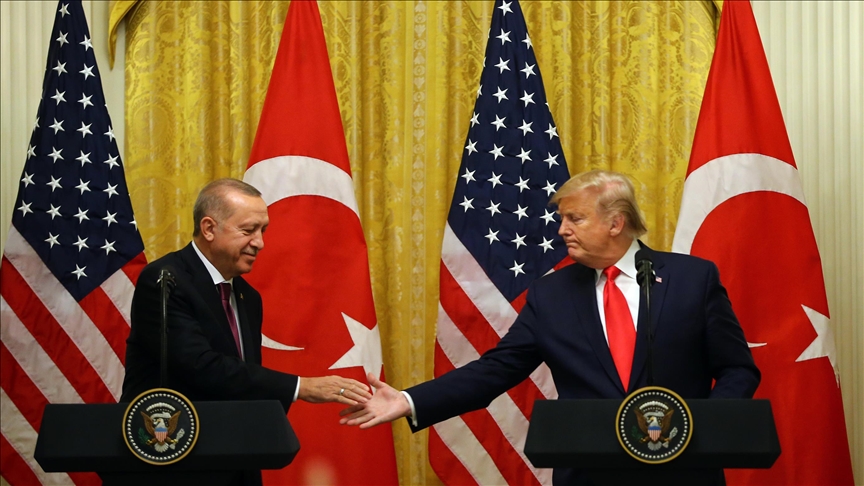
When the United States of America always acted by observing its interests, it tried to bind Türkiye to itself with the policy and sanctions it applied. In return, the Republic of Türkiye State gave a note to America’s embargoes and sanctions in a way after 1960, and protected its own power against all kinds of ambitions that would damage its economic independence with counter-sanctions. Türkiye, having a say in the Middle East dominance struggle with the balance policy it applied, was subjected to various terror activities by being made to pay heavy prices when it fell contrary to the USA’s interests. With the changing power balance, the Republic of Türkiye State continues to have a say in the region both militarily and politically with various balance alliances.
References
[1] Fahir Armaoğlu, “20. Yüzyıl Siyasi Tarihi 1914-1995”, Timaş Yayınları, İstanbul 2016, s.69.
[2] İnfirat Politikası: Ayrı durma. İzolasyonizm ve Monroe doktrini kavramlarıyla kullanılır. Uluslararası sorunlara aktif olarak katılmamayı, ticari ilişkileri en alt düzeyde tutmayı öngören dış politika stratejisidir.
[3] Armaoğlu, Siyasi Tarih, s.73.
[4] 7 Mayıs 1830’da imzalanan ticaret antlaşmasıdır.
[5] Remzi Durmuş, “Geçmişten Günümüze Türk-Amerikan İlişkileri”, https://tasam.org/tr-TR/Icerik/4118/gecmisten_gunumuze_turk_-_amerikan_iliskileri_ Erişim: 15.06.2025.
[6] Amerikan Dış Misyonlar Komiserliği, 1810 yılında Williams Koleji mezunları tarafından kurulmuştur. İlk Amerikan Hristiyanlık misyoner örgütleri arasında yerini alır.
[7] Durmuş, Türk-Amerikan İlişkileri, s. 3.
[8] Ömer Kalaycı, “Kürtçülüğün ve Bölücü Terör Örgütünün Avrupa Yapılanması”, Erişim: 24.05.2025 https://kalayciomer.wordpress.com/2024/02/09/kurtculugun-ve-bolucu-teror-orgutunun-avrupa-yapilanmasi/
[9] Demiryolları kurma ve maden çıkarma projesi olarak sunulan aslında ABD’nin imtiyazları almak istediği kendi nüfuz plandır.
[10] Rıfat Uçarol, “Siyasi Tarih 1789-2014”, Der Yayınları, İstanbul 2013, s.509.
[11] Uçarol, Siyasi Tarih 1789-2014, s. 509.
[12] Nuri Karakaş, “Amerika’nın Ödünç Verme ve Kiralama Yardımlarında Türkiye”, Tarih İncelemeleri Dergisi, C.24, S. 1, Temmuz 2009, s. 22.
[13] Oral Sander, “Siyasi Tarih 1918-1994”, İmge Kitapevi Yayınları, 2004, s.192.
[14] Sander, Siyasi Tarih, s. 258.
[15] Uçarol, Siyasi Tarih 1789-2014, s. 739.
[16] Kemal Akmeral, “Kıbrıs Türk’ünü İmhayı Hedefleyen Akritas Planı ve Annan’a dek Uzanan Planlar Süreciyle Kıbrıs”, İstanbul: Bilge Karınca Yayınevi, 2004, s. 99.
[17] Durmuş, Türk-Amerikan İlişkileri, s. 6.
[18] Tekin Önal ve Abdullah Özdağ, “Körfez Savaşı ve Türk Dış Politikalarına Etkileri”, Turkish Studies, C:11/16, ss. 53-70, 2016, s. 57.
[19] Mehmet Kurum, Begüm Çardak vd, Türkiye’de Ayaklanmalar, Tedhiş Hareketleri ve Terörizm, ed. Mehmet Kurum, “Osmanlıdan Günümüze Türkiye’de Terörizm ve Terörizmle Mücadele”, Ankara: Nobel Yayınları, 2024, ss. 212-213.
[20] Ömer Kalaycı, “Örtülü İttifaktan Resmi İşbirliğine: ABD-PKK/YPG Stratejik İlişkileri”, Erişim: 20.06.2025 https://stratejikortak.com/2024/04/ortulu-ittifaktan-resmi-isbirligine-abd-pkk-ypg-stratejik-iliskileri.html
[21] Kalaycı, Örtülü İttifaktan Resmi İşbirliğine.
[22] İbrahim Çevik, “Diplomasi ve İstihbarat Eliyle Kürt Toplum Mühendisliği “Kürt Srunu”mu Yoksa Örtülü Operasyon mu?”, Ankara: Ayrıntı Basım Yayım, 2010, s. 379.
[23] Kalaycı, Örtülü İttifaktan Resmi İşbirliğine.
[24] Ömer Kalaycı, “Bölücü Terör Örgütü PKK/KCK’nın Uluslararası Aktörlerle Stratejik İlişkileri”, Erişim: 20.06.2025 https://ulesam.org/bolucu-teror-orgutu-pkk-kcknin-uluslararasi-aktorlerle-stratejik-iliskileri/
[25] Ahmet Özcan-Emrah Özdemir, “Kore’den Suriye’ye Türk Ordusu Sınır Ötesi Harekâtlar”, İstanbul: Yeditepe Yayınevi, 2023, s. 191.
[26] İlyas Er-Gülten Güneş, “Türkiye’yi Hedef Alan Terör Örgütlerinin Kolektif Terör Faaliyetleri Örnekleri”, Akademik Tarih ve Düşünce Dergisi, C:12, S:3, ss. 395-425, s. 397.
Fotoğraf: Anadolu Ajansı