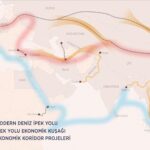



Recently, in response to both local and global challenges, Türkiye, Pakistan, and Saudi Arabia have increasingly explored closer defence and security cooperation, leading to discussions about a potential defence agreement. While no single, fully completed trilateral defence treaty has yet been signed, military cooperation and deepening strategic dialogue among the three states points toward the gradual formation of trilateral defence partnership. Due to the geographical aspects this evolving relationship provides significant implications for regional geopolitical architecture in the Middle East, South Asia, and beyond.
After nearly a year of negotiations, Türkiye, Pakistan, and Saudi Arabia have drawn up a draft defence agreement, Pakistan’s minister for defence production said, pointing to the possibility of stronger regional security cooperation. Speaking to Reuters, Pakistani minister Raza Hayat Harraj noted that the proposed trilateral framework is distinct from the bilateral defence pact announced last year between Pakistan and Saudi Arabia.[1] In the case of the Saudi–Pakistan mutual defence agreement, it is possible to draw a parallel with the mutual defence treaty between the United Kingdom and Germany, in which both parties agree to provide mutual assistance, including in response to military threats.
Such a military partnership encompasses several areas of activity, including defence production, technology transfer, and joint military exercises. Defence cooperation may also cover counterterrorism coordination, maritime security issues, and political collaboration on the international stage. The evolving defence cooperation among Türkiye, Pakistan, and Saudi Arabia reflects a strategic recalibration reasoned by shared security concerns and a desire for broader strategic autonomy. Another notable feature of this assumed trilateral treaty is its character as a non-Western security bloc founded on pragmatic interests. As a formal alliance, it could potentially challenge the traditional dominance of Western defence partnerships in Muslim-majority regions. Moreover, sustained strategic dialogue among the parties suggests the emergence of a long-term partnership with significant regional and global implications.
This emerging defence alignment illustrates the reinforcement of the principle of regionality in international relations and the redefinition of defence cooperation within a specific geographical and strategic context involving particular states. In a nutshell, the collective defence clause and a shared security strategy constitute the core elements of the mutual defence pact. Consequently, such a pact entails significant obligations and responsibilities for the signatory parties. The parties are obliged to comply with the norms of international law, act in accordance with the principle of good faith, and refrain from the use of armed force against other states. Any kind of abuse of the power shall be avoided.
Thus, within the strategic standpoint there are various perceptions or attitudes regarding the above-mentioned assumed agreement. From a geostrategic perspective of Pakistan, this emerging trilateral alignment offers significant abilities for defence industrial development, strategic autonomy, and geopolitical balancing amid shifting global power structures. Pakistan has increasingly followed diversified defence cooperation beyond traditional allies. Within this context, the growing defence engagement with Türkiye and Saudi Arabia represents a strategic opportunity to strengthen Pakistan’s military capabilities, defence industrial capacity, and diplomatic leverage. Comprehensive defence engagement with Türkiye and Saudi Arabia may also indirectly influence the regional balance in South Asia. While not explicitly directed against India, enhanced Pakistani capabilities and diversified partnerships contribute to deterrence stability by complicating adversarial strategic estimations. Hence, this alignment allows Pakistan to position itself as a key security partner for Muslim-majority states, a role further reinforced by the emerging Türkiye–Pakistan–Saudi defence convergence.
On the one hand, Türkiye’s evolving defence industry — particularly in the fields of unmanned systems and naval platforms — offers Pakistan access to advanced yet relatively affordable technologies. On the other hand, Saudi Arabia provides financial capacity and political influence, thereby reinforcing the sustainability and long-term viability of defence collaboration.
The assumed trilateral agreement serves Türkiye’s strategic objectives of diversifying defence exports, pursuing geopolitical balancing, and exercising leadership within non-Western security frameworks. Characterized by flexibility, pragmatism, and mutual benefit, such military engagement would enhance Ankara’s strategic autonomy, strengthen its defence export ecosystem, and promote its role as a pivotal geopolitical actor connecting South Asia and the Middle East. Simultaneously, taking into consideration Türkiye’s important contribution to European security and its growing military capabilities, it seems effective for other countries to establish bilateral defence cooperation with Ankara.
Finally, from a Saudi strategic perspective, defence cooperation with Türkiye and Pakistan represents a pragmatic response to unstable regional and global security dynamics. It supports Saudi Arabia’s Vision 2030 goals, reinforces defence industrial capacity, and enhances strategic autonomy through diversified partnerships. While still developing, the Türkiye-Pakistan-Saudi defence rapprochement holds long-term potential to contribute to regional stability and multipolar security cooperation. For Saudi Arabia, persistent engagement with Türkiye and Pakistan offers a pathway toward resilience, flexibility, and greater influence within an increasingly interconnected security environment. The mutual defence treaty with Pakistan was concluded amid increased security concerns, at a time when trust in Western partners had been undermined. It is worth noting that the recent collapse of the Southern Transitional Council in Yemen led to the restoration of Riyadh’s influence in Yemeni politics. However, it may also initiate a new phase of rivalry, as some territories remain under the control of Iran-backed Houthi armed forces. Accordingly, the heightened geopolitical circumstances along its southern borders and across the Middle East, supplemented by hybrid warfare, have pushed Riyad to reshape its foreign policy strategy in response to current realities.
It should be noted that defence cooperation ensures greater diversification in procurement, technology transfer, and joint production, thereby reducing vulnerability to external pressure. Moreover, defence cooperation has a political dimension that consolidates diplomatic support on geopolitical issues. Strategic autonomy and deterrence capabilities occupy a crucial place in the regionally grounded defence architecture.
References
TRT World. (2026). Türkiye, Pakistan, Saudi Arabia defence deal ‘in pipeline’. https://www.trtworld.com/article/0ddf25688812
Fotoğraf: TRT World