

In recent years, Türkiye’s foreign policy has shown a tendency not to remain limited to its immediate neighborhood, but to expand into a wider geopolitical sphere. Within this framework, the “Africa initiative”—specifically the North Africa line—stands out as a critical area for Ankara in terms of energy supply security as well as military and strategic interests.
North Africa is a region where Türkiye can establish cultural and historical ties due to its Ottoman past. However, beyond history, it is a focal point of global power competition, situated at the intersection of Europe and Africa, and the Mediterranean and the Sahara. The significance of this region for Türkiye is too multi-dimensional to be explained solely by a rhetoric of “historical proximity” based on past ties. The core issues are the need to diversify energy security, the quest to overcome the geopolitical constriction faced in the Eastern Mediterranean, and Africa’s future eco-political importance.
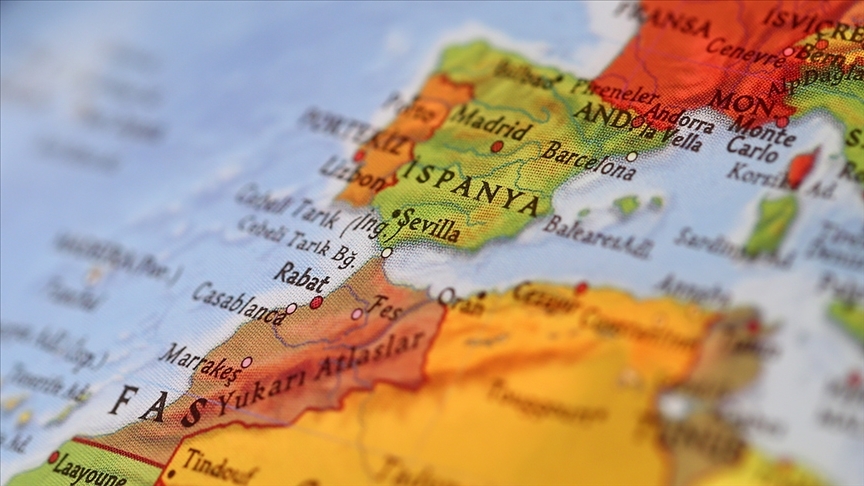
In this context, the trio of Libya, Algeria, and Morocco sits at the center of Türkiye’s North Africa strategy. However, the relationships Ankara has established with these countries are not limited to today’s interests; they are also shaped by future-oriented scenarios. Therefore, analyzing Türkiye’s moves in North Africa requires both understanding current developments and discussing potential regional and global scenarios.
Libya is Türkiye’s most decisive dossier in North Africa. Following the Arab Spring, Libya rapidly drifted into instability, creating both risks and opportunities for Türkiye. On one hand, the civil war created permanent chaos south of the Mediterranean, threatening energy supply security; on the other, it allowed Türkiye to test its military and diplomatic capacity. The maritime jurisdiction agreement Ankara signed with the Government of National Accord (GNA) went down in history as a strategic move developed against isolationist policies in the Eastern Mediterranean. Through this agreement, Türkiye aimed not only to remain at the table regarding energy sharing in the Eastern Mediterranean but also to gain access to energy corridors via Libya.
Libya’s future can be tied to three fundamental scenarios:
- Scenario 1: The formation of a strong central government and Türkiye maintaining a strategic partnership with this government.
- Scenario 2: The country drifting into a state of permanent division; in this case, Türkiye retains partial influence through the Tripoli-based government but continues to compete with Russia, Egypt, and the UAE via actors in the east.
- Scenario 3: Türkiye’s influence is limited due to international pressure, forcing Ankara to intensify diplomatic channels.
Taking these three scenarios into account, Türkiye’s policymakers are attempting to make their military presence permanent while pursuing a strategy of holding ground through economic investments.
While not as chaotic as Libya, Algeria is a major energy partner for Türkiye. With Europe entering an energy crisis following the Ukraine war, Algeria has become a critical source for natural gas and LNG supplies. This has led Türkiye to elevate its relations with Algeria to a strategic level. Diversification in energy supply security is one of Ankara’s top priorities. To reduce dependence on Russia, Algeria is an attractive alternative alongside Azerbaijan and Qatar.
The future of Türkiye-Algeria relations rests on two possibilities:
- Türkiye increasing LNG imports from Algeria and diversifying its energy diplomacy.
- Algeria’s traditional ties with France and Russia limiting Türkiye’s influence.
Despite everything, Türkiye’s rise in the defense industry and its prestige in UAV (drone) technology could bring Algeria closer to Ankara in the long run.
Morocco carries a different dynamic. While not a major energy producer for Türkiye, Morocco offers cooperation opportunities in renewable energy. Furthermore, due to the Western Sahara issue, it is under the intense influence of both the US and France. Türkiye has pursued a policy of balance here, increasing commercial and defense cooperation with Morocco. The purchase of Turkish armed drones by Morocco is a development that enhances Türkiye’s military-diplomatic effectiveness in North Africa.
In the Moroccan case, the element Ankara is most careful about is avoiding taking a side in the Western Sahara issue. Instead of taking a direct position, Türkiye establishes a presence through economic cooperation and the defense industry. In future scenarios, Morocco will either become an expanding market and area of defense cooperation for Türkiye, or it will turn into a difficult balancing act if the Western Sahara issue hardens.
Looking at the general picture, Türkiye’s repositioning in North Africa is not only about bilateral relations but is also directly linked to its Eastern Mediterranean strategy. While the bloc formed by Greece, the Greek Cypriot Administration, Israel, and Egypt attempts to exclude Türkiye in the Eastern Mediterranean, Ankara is trying to break this isolation by strengthening its alliances in North Africa. The maritime jurisdiction agreement with Libya is the most concrete example of this.
However, the sustainability of this strategy depends on managing regional instabilities. Permanent instability in Libya could put Türkiye’s gains at risk. Relations with Algeria could be affected by the France factor. Cooperation with Morocco could fluctuate depending on the course of the Western Sahara crisis. Consequently, Türkiye’s gains in North Africa also contain serious fragilities.
In conclusion, Türkiye’s repositioning in North Africa is a reflection of its effort to diversify energy supply security as well as a strategic opening developed against geopolitical isolation in the Eastern Mediterranean. Policies conducted through Libya, Algeria, and Morocco provide Ankara with short-term advantages but harbor various long-term risks. Türkiye’s ability to achieve permanent influence in this region depends not only on its military-diplomatic capacity but also on diversifying its economic investments and skillfully managing regional balances.
In the coming decade:
- If stability is achieved in Libya, Türkiye could gain a significant military and energy partner.
- If relations with Algeria deepen, a new chapter in energy supply security could be opened.
- If defense cooperation and trade with Morocco develop, Ankara could achieve a more balanced position in North Africa.
However, none of these scenarios are certain. Therefore, Türkiye’s North Africa strategy necessitates a flexible foreign policy understanding focused on protecting gains, evaluating new opportunities, and managing risks.
Photograph: Anadolu Ajansı