


Mohammad Ali Ghanamizadeh Fallahi
Introduction
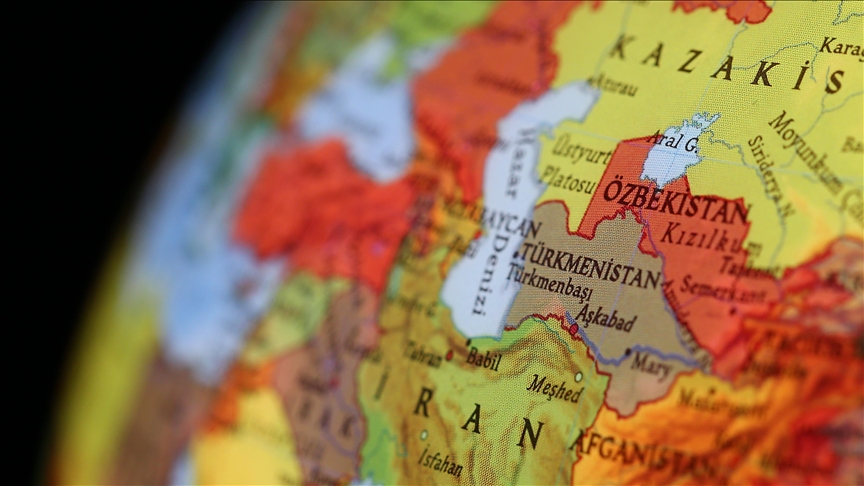
Amid the geopolitical upheavals of the winter of 2026, when Iranian skies witnessed one of the most intense combined offensives carried out by United States and Israeli coalition forces, the attention of analysts extended beyond the immediate battlefield in the Middle East to the northern periphery of the crisis, particularly the belt of states stretching across the Caucasus and Central Asia. This region, bound to Iran through centuries of deep historical, linguistic, religious, and civilizational connections, suddenly found itself confronted with a demanding diplomatic and ethical test: how to respond to a crisis engulfing a long-standing neighbor and cultural partner. What ultimately unfolded, however, diverged significantly from initial expectations. Contrary to widespread speculation that governments might issue explicit political statements, dispatch substantial humanitarian assistance, or even adopt diplomatic condemnations, most states within this civilizational sphere from Azerbaijan at the heart of the South Caucasus to Kazakhstan across the vast steppes of Central Asia, and from Persian speaking Tajikistan to Armenia, historically one of Iran’s most consistent regional partners, quietly converged on a remarkably similar strategy that may be described as the minimum acceptable response. Official condolences following the deaths of senior Iranian officials, modest shipments of medical supplies, and a careful avoidance of any overt political gesture that could signal alignment together produced the image of a profound and carefully calibrated strategic silence. This apparently paradoxical behavior, in which longstanding historical and cultural proximity was set aside in favor of a restrained and rather austere neutrality, immediately raised a fundamental question within analytical and policy circles in Iran and across the region. What explains this deafening silence? Why did neighbors whose security trajectories remain closely intertwined with that of Iran choose to remain cautious spectators at such a sensitive moment?
To understand this complex puzzle it is necessary to move beyond reductionist interpretations that attribute such behavior merely to fear or passivity and instead adopt a more refined analytical lens. What can be observed in the foreign policy conduct of the states of the Caucasus and Central Asia in the period following February 2026 is not passive inertia nor neutrality born of helplessness. Rather it represents the visible manifestation of a sophisticated and well tested strategy designed to navigate the intensifying competition among global power blocs for systemic influence. In the conceptual framework employed in this study this strategy is defined as active neutrality. Within this perspective silence does not signify the absence of action or the abandonment of agency. Instead it constitutes a costly, deliberate, and multilayered diplomatic act whose ultimate objective is not confrontation with any of the parties involved but the preservation of regime survival, the protection of national security, and the safeguarding of each state’s corridor position within the emerging regional order. This analytical note seeks to unpack the strategic calculations operating behind the scenes in regional capitals and to demonstrate how several factors have converged to shape this posture. These include the emulation of Türkiye’s oscillatory balancing behavior and China’s doctrine of strategic silence, the fear that extremist sleeper networks might be activated along the economic chokepoints of Central Asia, and finally the imperative of survival amid an escalating bloc level struggle for geopolitical primacy. Together these dynamics have gradually pushed notions of historical solidarity and neighborhood obligation to the margins while elevating active neutrality for corridor survival to the only viable option available to the governments of the Caucasus and Central Asia.
Active Neutrality
Before advancing further analysis it is essential to distinguish between passive neutrality, understood as silence driven by fear or isolation, and active neutrality, which represents silence as a costly strategic choice. Active neutrality, which serves as the principal analytical framework of this study, does not imply withdrawal from the geopolitical arena or mere observation from the sidelines. Rather it denotes a dynamic and highly calculated foreign policy posture through which a relatively weaker state situated amid competing power blocs deliberately refrains from declaring formal alignment. By doing so it seeks to preserve functional relations with all parties involved while safeguarding its sovereignty, national security, and long-term economic interests. Within this strategic logic silence does not constitute an absence of action. Instead it functions as a deliberate diplomatic instrument aimed at transforming the state into a secure hub rather than a battlefield for proxy confrontation. In contrast to the classical legal model of neutrality, exemplified by the Swiss case, active neutrality in Central Asia and the Caucasus reflects a geopolitical necessity for survival within a region that Russia traditionally regards as its strategic backyard and that China increasingly treats as a vital corridor within its broader geoeconomic architecture. From this perspective the seemingly restrained and distant reactions of these states to the hypothetical crisis of February 2026 should not be interpreted as the product of historical or cultural hostility toward Iran. Rather they represent the practical manifestation of a doctrine of active neutrality designed to preserve corridor based strategic relevance within an increasingly polarized geopolitical environment.
The Foundational Roots of Active Neutrality in the Caucasus and Central Asia
At first glance, the deep linguistic, cultural, and civilizational affinities that bind Iran with parts of this region, particularly with Tajikistan, or the relatively constructive political relations maintained with states such as Armenia, might appear sufficient grounds for the adoption of a clearer and more explicit political stance in support of Tehran. Yet the observable reality suggests otherwise. Even a country such as Armenia, which consistently describes Iran as a strategic partner and has witnessed a steady expansion of bilateral trade with it in recent years, limited its response to the dispatch of humanitarian and medical assistance while carefully avoiding any political or military positioning. This seemingly paradoxical behavior becomes intelligible only when examined through the strategic calculations shaping the foreign policy doctrines of these states.
The Survival Doctrine: Regime Security Over Historical Solidarity
The most decisive factor shaping foreign policy behavior across the region is the preservation and continuity of existing political structures. Governing elites in countries such as Kazakhstan, Uzbekistan, Tajikistan, and Azerbaijan have gradually internalized a critical lesson drawn from the geopolitical transformations that followed the collapse of the Soviet Union. In the post Cold War environment, strategic dependence on a single external power represents one of the most serious threats to sovereignty and regime survival.
Having experienced a fragile period of independence following the dissolution of the Soviet Union, these states have developed both a psychological and strategic consensus that distancing themselves from centers of geopolitical confrontation while simultaneously managing relations with all major powers constitutes the most reliable pathway to long term stability. Within this political logic concepts such as historical solidarity or broader notions of Islamic unity fade in significance when placed alongside the imperatives of national security and regime survival.
The Balancing Doctrine: Operating in the Gray Zone Between Powers
As noted earlier, the policy of active neutrality is not merely a voluntary preference but rather a structural necessity within a region deeply embedded in great power competition. On one side the Caucasus and Central Asia remain historically situated within Russia’s traditional sphere of influence, reinforced through institutional mechanisms such as the Collective Security Treaty Organization. On the other side the region has become a central arena for China’s expanding economic presence through the Belt and Road Initiative, which treats Central Asia as a critical transit corridor within its broader geoeconomic architecture.
At the same time Western powers led by the United States continue to pursue their own geostrategic projects aimed at reshaping regional connectivity and reducing Russia’s influence, including initiatives such as the proposed Trump Corridor designed to establish alternative transport routes.
Within such an environment an explicit declaration of support for one actor, for instance Iran, would effectively amount to joining one geopolitical camp while antagonizing the opposing bloc. Such a move could rapidly translate into internal instability, the suspension of essential economic cooperation, or even external security pressures. Consequently, neutrality in this region should not be interpreted as political passivity. Rather it functions as an assertive strategic posture designed to preserve maximum diplomatic flexibility while extracting economic and political benefits from multiple competing powers simultaneously.
The Echo of the Ukraine War: If Russia Could Not, How Could We?
The war in Ukraine has exerted a profound and immediate impact on the security psychology of the post Soviet states. Political elites across the Caucasus and Central Asia have closely observed how Russia, historically regarded as the primary security guarantor in the region, became absorbed in a prolonged and costly war that has tied down a significant portion of its military and diplomatic capabilities for several years.
This development has generated a fundamental question within the strategic thinking of these governments. If Russia, as a major nuclear power, has struggled to fully secure its strategic objectives in Ukraine, how can smaller states rely on a single external power to guarantee their own security against emerging threats? The implications of this perception are significant. It has reinforced a growing inclination toward self reliance, pragmatic diplomacy, and the avoidance of rigid geopolitical alignments. Rather than anchoring their security in the protection of a single great power, these states increasingly seek to diversify their external relations while maintaining a carefully calibrated posture of neutrality.
The Emergence of a New Regional Order: Corridors Instead of Military Alliances
The geopolitical dynamics of the Caucasus and Central Asia are gradually shifting from a primarily security centered framework toward a corridor based economic order. The peace agreement reached in August 2025 between Armenia and Azerbaijan through Washington’s mediation, which paved the way for the launch of the so-called Trump Route project, represents a prominent example of this transition.
Within this emerging regional order the most valuable strategic asset for states is no longer ideological alignment or military alliance, but the ability to position themselves as a transit hub within the expanding networks of East West trade. Kazakhstan’s decision to join the Abraham Accords and redefine aspects of its relations with Israel and the United States, or Uzbekistan’s effort to maintain a delicate equilibrium among China, Russia, and the United States, illustrate how regional actors are recalibrating their policies within this new geoeconomic framework.
Under such conditions involvement in proxy conflicts or open support for one party in a regional confrontation carries significant risks. Such choices could jeopardize crucial economic opportunities, disrupt transit ambitions, and ultimately transform a state from a strategic intermediary into a geopolitical casualty.
The Role of Great Powers: What Interests Have They Injected into the Region?
To understand more precisely why the doctrine of active neutrality has become the dominant strategic posture in the Caucasus and Central Asia, it is necessary to examine the interests and strategies of the principal external actors operating in the region.
Israel: From Peripheral Alliance to Corridor Alliance
Israel’s presence in the region, particularly in Azerbaijan, has evolved far beyond the boundaries of conventional security and arms cooperation. What once functioned primarily as a military partnership has gradually developed into a deeper strategic alignment. In exchange for advanced weapons systems and military technologies, Israel seeks to advance several key objectives. First, the expansion of its strategic footprint along Iran’s northern frontier. Intelligence and security cooperation with Azerbaijan provides Israel with a valuable platform for monitoring developments along Iran’s borders and creates a direct lever of pressure against Tehran.
Second, participation in emerging energy and trade corridors. Israel is increasingly interested in playing a role in the development of new regional transit routes, including projects such as the Trump Route, which promise both economic benefits and alternative commercial pathways that bypass Iranian territory. Third, the expansion of the Abraham Accords framework. Drawing Central Asian states, particularly Kazakhstan, closer to this diplomatic architecture would represent a major strategic and symbolic victory for both Tel Aviv and Washington. As a result, the reactions of Azerbaijan and even other regional states toward developments involving Iran are increasingly shaped by the calculations associated with this broader strategic alignment with Israel and Western powers.
Russia: A Partner That Is No Longer a Security Guarantor
Although Russia continues to preserve elements of its traditional influence through institutions such as the Collective Security Treaty Organization, its role as an absolute security guarantor has been significantly weakened. The strategic partnership agreement signed between Russia and Iran in January 2025 does not constitute a mutual defense treaty and does not obligate Moscow to provide military protection to Tehran. At the present moment Russia’s primary strategic focus lies in managing the war in Ukraine while maintaining stability within what it considers its near abroad, namely the Caucasus and Central Asia. This priority effectively communicates a clear message to regional governments. They are expected to avoid any form of geopolitical adventurism that could destabilize the region and potentially draw Russia into an additional front of confrontation. Such signaling indirectly reinforces the inclination of regional states to adopt a cautious posture of neutrality.
Another factor must also be considered. A significant dimension of Russia’s foreign policy rests on energy diplomacy and what is often described as pipeline diplomacy. Energy corridors and pipeline networks function as one of Moscow’s most important instruments of geo-economical leverage against Western influence. Any spillover of instability from the hypothetical 2026 war involving Iran into the Caucasus and Central Asia would place these pipeline systems at risk, potentially undermining one of Russia’s most important strategic tools for balancing Western hegemony. From Moscow’s perspective, therefore, regional stability and the avoidance of escalation remain essential priorities.
China: The Silent Economic Partner and the Preference for Distance from Crisis
China’s influence across Central Asia is overwhelmingly economic in nature. Beijing’s primary objective is to ensure the security of trade routes associated with the Belt and Road Initiative while preventing instability along what it considers one of its most critical geoeconomic corridors. Any military confrontation that could disrupt supply chains or threaten large scale infrastructure investments is viewed in Beijing as deeply undesirable. Many Central Asian states also possess significant reserves of rare earth elements. In recent years the control of supply chains and the management of these strategic resources have become a central arena of competition between China and the United States. For this reason, China exerts a subtle yet meaningful pressure on regional governments to maintain neutrality and to prevent the spillover of Middle Eastern conflicts into China’s economic sphere of influence.
In the Caucasus as well China’s approach remains largely pragmatic and infrastructure focused. Its priority lies in developing railway transport corridors that connect Asian markets with Europe rather than becoming entangled in regional geopolitical disputes. This economy centered strategy serves as a powerful incentive for regional governments to maintain neutral positions.
For many years China has also attempted, through the Belt and Road Initiative, to modernize the customs systems, transit infrastructure, logistics networks, and economic management frameworks of Central Asian states. These efforts aim to transform the region from a simple transit passage linking corridors into a more sophisticated network-based system in which regional actors play active roles in decentralized yet coordinated transit management within an integrated economic core. The spread of instability from the 2026 conflict involving Iran into this region would introduce serious risks to these long-term transformation efforts. Consequently, a recognizable behavioral pattern has emerged in the foreign policy conduct of many Central Asian states, one that closely resembles China’s own preference for strategic silence during major security crises. Within this evolving diplomatic environment Türkiye has also played an important role in shaping regional foreign policy behavior through what may be described as a pendulum style balancing approach, encouraging governments to maneuver flexibly between competing centers of power rather than committing permanently to any single bloc.
Imitating Türkiye’s swing activism Strategy and China’s Strategic Silence: Two Complementary Survival Models in a Transitional Order
One of the most important explanations for the cautious behavior of the Caucasus and Central Asian states toward the hypothetical crisis involving Iran lies in their pragmatic and conscious emulation of two successful behavioral models within the contemporary international system: Türkiye’s swing state model and China’s doctrine of strategic silence. Over the past decade Türkiye has demonstrated how a middle power can pursue a balanced and multilayered foreign policy while simultaneously maintaining relations with competing geopolitical blocs. Ankara remains a formal member of NATO, negotiated the purchase of the Russian S‑400 missile defense system, provided decisive military support to Azerbaijan during the Karabakh conflict, and at the same time preserved economic and security relations with Iran. This pendulum style diplomacy does not reflect inconsistency or lack of strategic identity. Rather, it represents a deliberate strategy designed to transform Türkiye into an indispensable actor for all major power centers.
The core logic behind this approach is the deliberate avoidance of permanent alignment. By maintaining working relations with multiple competing blocs, Türkiye maximizes its strategic autonomy while simultaneously benefiting from the rivalries among larger powers. Observing Ankara’s relative success in navigating these complex geopolitical competitions, governments in the Caucasus and Central Asia have drawn an important conclusion. In a world where geopolitical blocs are fluid and increasingly fragile, absolute dependence on a single patron represents a strategic vulnerability, while flexibility and multidirectional diplomacy function as the most reliable safeguards of sovereignty. From the Turkish experience they have learned that it is possible to benefit from the competition among Russia, China, Western powers, and even regional actors such as Iran without fully entering the political camp of any one of them.
Alongside this dynamic and proactive model, regional governments have also been strongly influenced by China’s approach of strategic silence in the face of international security crises. During the war in Ukraine, the Gaza conflict, tensions in the Red Sea, and even border confrontations in the Caucasus, Beijing has consistently adopted a restrained and predictable posture. Its responses have generally been limited to minimal diplomatic engagement, calls for restraint, and a careful avoidance of statements or actions that might be interpreted as explicit alignment with one side of a conflict. This behavior reflects the deeper logic of China’s doctrine of peaceful development and the overriding priority it assigns to the security of its massive investments within the Belt and Road Initiative. In Central Asia, and particularly in Tajikistan which constitutes a critical gateway connecting land corridors toward Iran, the Persian Gulf, and Europe, China has invested billions of dollars in transport infrastructure, logistics networks, and energy connectivity. Any form of instability, unrest, or spillover of Middle Eastern conflicts into this region would directly threaten the security of these investments and undermine the credibility of China’s broader strategy of globally integrated development centered on Chinese economic networks.
Beijing is also deeply concerned about the potential reactivation of dormant extremist and militant networks across the region, particularly in Tajikistan and the Ferghana Valley, areas that historically have demonstrated connections with transnational radical organizations. A resurgence of such actors could severely disrupt trade corridors and infrastructure projects that constitute the backbone of China’s regional strategy. For this reason, China exerts a subtle but powerful form of pressure on the governments of the region. The implicit message is clear. Under no circumstances should they adopt positions that signal support for one party in regional conflicts or allow external crises to expand into China’s economic sphere of influence. This expectation, combined with regional concerns about the collapse of the existing balance of power, has become one of the most important deterrents preventing these states from adopting any meaningful or overtly partisan reaction to developments surrounding Iran.
Azerbaijan
The role of Azerbaijan’s Shiite population, which according to unofficial estimates constitutes between 65 and 75 percent of the country’s population, has not functioned in Baku’s foreign policy toward Iran as a bottom-up pressure mechanism. Rather, it operates as a carefully managed variable within Ilham Aliyev’s national security doctrine. Contrary to the widespread assumption that this population could be mobilized by Iran or against the interests of the Azerbaijani state, the Azerbaijani government over the past two decades has effectively neutralized this potential vulnerability through a sophisticated dual strategy.
On the one hand, the state has systematically suppressed any form of political Islam, whether Shiite or Sunni. Religious political organizations have been dismantled, including the Islamic Party of Azerbaijan, and strict controls have been imposed on clerical networks, religious institutions, and transnational religious connections. As a result, the political expression of Islam has been almost entirely removed from the public sphere.
On the other hand, the government has actively promoted a secular Azerbaijani nationalism grounded in language, ethnicity, and the symbolic centrality of the Karabakh territorial narrative. Through this ideological reorientation, the loyalty of the Shiite population has gradually been redirected away from the axis of transnational religious identity and toward the framework of national citizenship and state centered identity. The outcome of this long-term social engineering project is that the Shiite population in Azerbaijan increasingly defines itself not as part of a transnational Shiite community led by Iran, but rather as Azerbaijani citizens who adhere to a particular religious tradition. Nevertheless, this variable has not disappeared from Azerbaijan’s strategic calculations. Its nature has simply evolved. Baku’s principal concern is not an Iranian inspired Shiite uprising. Instead, the deeper fear lies in the possible emergence of an internal identity cleavage within the political system over the long term. Such a fault line could potentially become activated during moments of political transition, succession crises, or periods of weakened central authority.
For this reason, Azerbaijan’s foreign policy has consistently attempted to maintain a delicate strategic balance. While Baku has steadily deepened its security and intelligence partnership with Israel and strengthened its broader alignment with Western actors, it has also remained careful not to cross certain implicit red lines in its relationship with Iran. Azerbaijani leaders generally avoid actions that would directly threaten the survival of the Islamic Republic or provoke strong religious sensitivities within their own domestic population.
More precisely, the Shiite population within Azerbaijan functions neither as an operational arm of Iran nor as a destabilizing domestic opposition force. Instead, it operates as a form of mutual strategic hostage within the regional balance. Baku fears that a collapse of the Iranian state could unleash refugee flows, ideological radicalization, and cross border instability that would disrupt the fragile equilibrium of its domestic political order. Tehran, for its part, understands that the Azerbaijani state possesses both the institutional capacity and the political will to suppress any form of religious mobilization with considerable decisiveness. It was precisely this complex logic that pushed Azerbaijan during the hypothetical crisis of February 2026 toward a posture of active neutrality grounded in minimal diplomatic engagement. Baku sought to avoid moving so close to Iran that it would provoke Israel and Western partners, while simultaneously refraining from actions against Iran that could awaken dormant identity cleavages within its own society.
Armenia
To understand Armenia’s policy of active neutrality toward the Iran crisis, it is necessary to examine the simultaneous and at times contradictory roles of four key actors in the country’s security and economic equations: Russia, India, France together with the European Union, and China. Russia, as Armenia’s traditional ally and long-standing security guarantor, continues to exert the most significant influence on Yerevan’s strategic calculations. Despite the sharp decline in Armenian trust toward Moscow following Russia’s perceived passivity during the Karabakh war, Russia still retains critical leverage over Armenia. This influence derives from the presence of the Russian 102nd military base in Gyumri, Gazprom’s ownership over a substantial portion of Armenia’s gas infrastructure, and Russian control over the Metsamor nuclear power plant.
At the same time, Armenia’s growing rapprochement with France and the European Union, reinforced through the signing of a strategic cooperation charter with the United States and the emerging prospect of eventual European Union membership, has effectively placed Yerevan at the front line of geopolitical competition between Russia and the West. In parallel, India has emerged as a new defense partner for Armenia. Through the signing of the 2026 defense cooperation program and the delivery of Pinaka missile systems, New Delhi has begun to provide a partial alternative to Armenia’s traditional dependence on Russian military equipment.
Meanwhile China has also entered the equation. In August 2025 Beijing formally established a strategic partnership with Armenia and expressed interest in constructing the Armenia Iran railway as part of the Belt and Road Initiative. Through this engagement China seeks both to secure its trade corridors and to preserve regional stability. Yet an even more decisive factor explains why Armenia, despite its deep strategic relationship with Iran and its interest in signing a formal strategic cooperation agreement with Tehran, ultimately adopted a posture of active neutrality during the crisis of February 2026. This factor is Armenia’s existential interdependence with the stability of Iran on the one hand and its simultaneous need to avoid confrontation with major global powers on the other.
From one perspective, Armenian policymakers clearly recognize that Iran represents the country’s only secure land connection to the outside world through the Norduz border crossing. Iran also functions as the most important geopolitical counterweight to Armenia’s regional isolation imposed by Türkiye and Azerbaijan. Any serious weakening or collapse of the Iranian state would therefore mean the loss of this vital strategic depth for Armenia.
From another perspective, Armenia is deeply concerned about the possibility of becoming a proxy battleground for great power competition. Adopting an openly pro-Iranian position could easily be interpreted as a hostile signal toward Israel and the United States, which have recently facilitated a peace agreement between Armenia and Azerbaijan. At the same time such a stance could also provoke Russian dissatisfaction, given Moscow’s interest in preserving stability within what it still considers its near abroad. Consequently, Armenia’s policy of active neutrality, expressed through minimal diplomatic condemnations of attacks and the official declaration that the crisis poses no direct security threat to Armenia, represents a calculated strategy for navigating this highly complex geopolitical environment. Yerevan seeks to avoid moving so close to Iran that it provokes the anger of major powers, while simultaneously refraining from distancing itself to such an extent that it loses its only vital geopolitical corridor and regional balancing partner.
In this context the simultaneous influence of Russia, which pressures Armenia to remain within its traditional strategic orbit, France, which encourages cautious Western alignment, India, which offers an alternative source of military procurement, and China, which prioritizes regional economic stability, collectively reinforces this posture of cautious neutrality as the only viable strategic option for Yerevan.
The West (United States and the European Union): “Peace Through Corridors” or the Containment of Russia and Iran?
Western strategy in the South Caucasus, particularly after the August 2025 peace agreement, has increasingly revolved around the Trump International Prosperity and Partnership Corridor, commonly referred to as TRIPP. The officially declared objective of this initiative is the promotion of regional peace and economic prosperity through connectivity and infrastructure development. However, behind this public narrative lie several strategic goals that are rarely articulated openly.
First, the strategy seeks to reduce Russian influence in the region by gradually removing the management and security oversight of strategic transport corridors from Moscow’s control. For decades Russia maintained a dominant position in regulating the logistical and security architecture of the South Caucasus. The development of alternative corridor governance mechanisms supported by Western institutions represents a direct attempt to dilute that influence.
Second, the corridor architecture indirectly aims to weaken Iran’s physical and strategic connectivity with the South Caucasus and Europe. The Zangezur corridor, which forms a critical segment of the broader TRIPP framework, has been designed in a way that could significantly reduce, and potentially sever, Iran’s land connectivity with Armenia and consequently its overland access toward the Caucasus and European markets. From a geopolitical perspective, this reconfiguration of regional transit routes could gradually marginalize Iran’s role in Eurasian connectivity networks.
Third, the project can be interpreted as part of a broader effort to construct a new regional order under American leadership. In this model, the traditional Russian security architecture would be replaced by a hybrid economic and security framework anchored in Western political influence, financial institutions, and infrastructure investment.
Within this evolving geopolitical environment, regional states increasingly face a binary strategic choice. They can either integrate into the emerging Western backed regional order, accepting both its economic benefits and its potential political risks, or remain outside the system and risk marginalization from future connectivity networks. In practice, maintaining distance from Iran and avoiding alignment with Tehran has gradually become an implicit condition for entry into this emerging framework. At the same time, the unpredictability of Donald Trump’s diplomatic style introduces an additional layer of uncertainty. His well-known reliance on abrupt shifts in policy, strategic ambiguity, and deliberately confusing negotiation tactics raises the possibility that short negotiation windows, such as a two weeks diplomatic pause, may serve primarily as a mechanism for creating temporary strategic breathing space rather than a genuine effort at long term stabilization. Under such a scenario, escalating tensions or even controlled regional conflicts could be used as instruments to reshape the economic geography of the region.
If prolonged instability were to undermine the economic viability of traditional Middle Eastern transit routes, Central Asia could rapidly emerge as the primary arena of geopolitical and economic competition. The region already possesses several structural advantages, including the preliminary infrastructure associated with the TRIPP corridor network, significant energy reserves, and substantial deposits of rare earth elements. These assets position Central Asia as a potential alternative hub for global supply chains should regional tensions around Iran and the Persian Gulf intensify further.
Conclusion
The minimal response demonstrated by the states of the Caucasus and Central Asia should not be interpreted as mere passivity or simple fear of great powers. Rather, it reflects a calculated and rational choice shaped by national priorities and the imperative of regime survival. This behavior can be conceptualized as “corridor survival geopolitics.” Within this emerging paradigm, the strategic value of a state is no longer determined primarily by its strategic depth or military alliances, but by its ability to function as a secure and stable transit corridor for international trade and connectivity. In such a system, neutrality is no longer a passive posture. It has evolved into an active diplomatic instrument that allows states to negotiate with multiple power centers simultaneously and attract investment from competing geopolitical blocs. Countries in the region have increasingly realized that by presenting themselves as reliable and politically neutral transit hubs, they can benefit from the strategic competition between East and West while avoiding the far more dangerous fate of becoming arenas of proxy conflict. This reality carries a serious strategic warning for Iran. It demonstrates that reliance on historical, cultural, and civilizational ties alone is extremely fragile when confronted with the hard power, economic incentives, and security frameworks shaping the emerging global order. Iran must urgently redefine its role within these evolving corridor dynamics and articulate a new strategic value proposition for its neighbors. In this context, Iran’s recognition—albeit belated—of the Strait of Hormuz as a potential geoeconomic lever highlights how critical control over strategic chokepoints has become in the new geopolitical environment.
At the broader systemic level, the international order appears to be transitioning from a unipolar structure toward an increasingly intense competition between major geopolitical blocs for global hegemony. In such a climate, even the smallest political gesture by a state is rarely interpreted as an independent act. Instead, it is quickly decoded as a signal of alignment with one camp or another.
Within this fragile and polarized environment, actions that might once have been considered routine diplomatic behavior—such as issuing condolences beyond formal diplomatic protocol or providing humanitarian assistance beyond the minimally acceptable level—can easily be interpreted by rival powers as declarations of political alignment. Such perceptions may trigger economic pressure, security repercussions, or diplomatic retaliation. Aware of their geopolitical constraints and internal vulnerabilities, the states of the Caucasus and Central Asia have therefore opted to adhere strictly to the minimum political and diplomatic thresholds in times of crisis—an approach that China itself has often adopted in comparable situations. By limiting their responses to these minimal standards, they avoid the moral and historical pressures that might otherwise push them toward taking sides, while simultaneously steering clear of the dangerous game of being labeled as belonging to a hostile geopolitical bloc.
Ultimately, this posture of active neutrality represents a clear and deliberate declaration of strategic intent within an increasingly turbulent global order:
“We are not your battlefield.”
Photograph: Anadolu Agency