


Mohammad Ali Ghanamizadeh Fallahi
In the past decades, the architecture of global supply chains and international trade networks was based on a fundamental assumption: the movement of goods would always follow the path of least resistance, which historically mainly meant the use of established northern corridors (through the Russian Federation) and strategic maritime bottlenecks. However, the dramatic geopolitical developments in recent years, and in particular the start of a full-scale war in the Middle East at the beginning of 2026, have completely shattered this assumption. The Middle Corridor or Trans-Caspian International Transport Route (TITR), which was previously seen only as a long-term prospect and a seasonal alternative to connecting China to Europe, is now being considered as It is the only safe, unsanctioned, and active backbone known in Eurasia.
This multimodal transportation network, which began on a route of 4,000 to 7,000 kilometers from western China and passes through Central Asia, the Caspian Sea, the South Caucasus, and the Republic of Türkiye, has faced fundamental changes in Beijing’s macro policies. Prior to 2022, the Middle Corridor accounted for less than one percent of the transportation volume between Europe and China, while the Northern Corridor (Russia) carried more than 86 percent of this traffic. But the outbreak of the Ukraine war in 2022, the Red Sea crisis in late 2023, and finally the start of the Middle East regional war in February 2026 have forced Beijing to shift its strategy from a strategic passivity to a critical priority over the corridor. Türkiye, as the connecting link and vital hinge of this corridor to Europe, has also upgraded its role from an intermediary actor to an indispensable logistics hub in the region by attracting huge infrastructure investments from China in ports and rail networks. This analytical report comprehensively dissects China’s infrastructure investments along the Middle Corridor, with a particular focus on Turkish soil, and assesses the geoeconomic impacts of the blockade of the Strait of Hormuz and the regional crises of 2026 on accelerating the development of this route.
The Collapse of Maritime Transit Architecture and the Emergence of the Geopolitical Shock of 2026
To understand the unprecedented importance of the Middle Corridor at this juncture, it is necessary to analyze the military and geopolitical contexts that have led to the paralysis of other trade routes. A series of military events in 2026 completely disrupted the architecture of intercontinental trade, transforming the need for a secure land route from an economic choice to a security imperative.
Military Operations and Blockage of the Persian Gulf Vital Artery
On February 28, 2026, the U.S. Armed Forces, in cooperation with its ally Israel, launched a large-scale military operation called “Operation Epic Fury” against the military, leadership, and nuclear infrastructure of the Islamic Republic of Iran. The operation, which was accompanied by the firing of hundreds of missiles and the execution of nearly 900 airstrikes in less than 12 hours, led to the assassination of Iran’s Supreme Leader and inflicted heavy strategic damage on the country’s defense structure. The U.S. approach to the operation was based on the doctrine that the dangers posed by Iran require preemptive and decisive action.
In response to these attacks, the Islamic Republic of Iran immediately closed the Strait of Hormuz, which is the only sea exit route from the Persian Gulf, on March 2, 2026. The IRGC enforced an effective military blockade of the international waterway with the extensive deployment of sea mines, speedboat operations and the use of drone crews. In one of these attacks, an oil tanker belonging to the Abu Dhabi National Oil Company (ADNOC) named Barakah was targeted, as well as the merchant ship HMM Namu. The economic effects of the blockade were catastrophic for the global economy. The Strait of Hormuz, which is traditionally the passage point for 20 percent of the world’s crude oil and 20 percent of the world’s liquefied natural gas (LNG), faced a sharp drop in traffic. Maritime transit volumes fell from about 3,000 ships per month to just 5 percent of pre-war levels, and the skyrocketing costs of war risk insurance forced shipping companies to halt operations in the region. Despite counterattacks and the US Navy’s attempt to establish a maritime escort under Operation Project Freedom in May and the formation of a reciprocal blockade, the situation in the Gulf became a stalemate and a “dual blockade”. These disruptions challenged global supply chains in the fields of energy, petrochemicals, aviation, and chemical fertilizers, and forced airlines to divert from the skies of the Middle East to the Caspian Sea and the South Caucasus.
Failure of complementary designs and blockage of alternative axles
Prior to the Hormuz crisis in 2026, the world was grappling with similar challenges in the Red Sea and the Suez Canal. The Houthis’ ongoing attacks on merchant ships had diverted about 90% of the container capacity of the Suez route to Cape of Good Hope in southern Africa. This long route change added up to 10 days to the transit time of goods from East Asia to Europe, and companies that switched to air freight faced a 15-fold increase in costs. However, the 2026 war also put other alternative schemes and competing corridors out of reach:
India-Middle East-Europe Economic Corridor (IMEC): Strategically designed with US support to connect India to Europe through the UAE, Saudi Arabia, Jordan and Israel, the corridor has been virtually halted due to the ongoing war in Gaza, the spread of the conflict into Lebanon, and the inflamed political and security environment in the Middle East. In addition, one of the challenges of the project was the choice of the port of Piraeus in Greece as the gateway to Europe, a port whose majority stake is held by China’s state-owned COSCO, a paradox that intensified strategic competition along the way.
1-Development Road: Türkiye-Iraq’s ambitious $17 billion project to connect the Persian Gulf to Europe through a rail and highway network on Iraqi soil, due to growing internal instability, a strong presence of Iranian-backed militias, and the Iraqi federal government’s inability to exercise sovereignty over local armed groups (especially in key areas such as Sinjar and the presence of PKK-linked forces) by international investors.It was assessed internationally as very risky. Despite Ankara’s diplomatic efforts to stabilize the new Iraqi government led by Ali Faleh al-Zaidi and provide Baghdad with air defense systems, the lack of a monopoly on legitimate violence in the hands of the Iraqi government has prevented this plan from being realized.
2-The Northern Corridor (Russian axis): The war of attrition in Ukraine and the complex architecture of Western sanctions against Moscow have transformed the Northern Corridor from an attractive route with integrated infrastructure into a legal and political risk. The withdrawal of Western companies from the Russian market and the lack of insurance services caused the volume of container transit goods on this route to fall from 90% in 2021 to 62% in 2022 and finally to 33% in 2023.
Amid this strategic vacuum and the collapse of traditional routes, the Middle Corridor, which reaches Türkiye through the Central Asian steppes, the Caspian watershed, and the Caucasus Corridor, has become the only breathing artery of East-West trade that does not pass through areas of direct military conflict and sanctions regimes.
The Metamorphosis of China’s Eurasian Strategy Towards the Middle Corridor
Beijing’s approach to the Middle Corridor as an offshoot of the Belt and Road Initiative (BRI) has undergone a complete metamorphosis and fundamental revision over the past decade. This evolution can be analyzed and evaluated in two completely distinct time phases.
Strategic Passivity and Geopolitical Caution (2013-2022)
Although the Middle Corridor was officially established in 2013 with the multilateral initiative of Azerbaijan, Georgia, Kazakhstan, and Türkiye, and critical hardware projects such as the Trans-Kazakhstan Railway in 2014 and the Baku-Tbilisi-Kars Railway (BTK) in 2017, the participation of the Chinese government and its state-owned investors during this period was extremely limited and conservative. The reasons for this passivity were rooted in Beijing’s sophisticated calculations: first, strategic considerations toward Moscow prevented China from seriously intervening. Beijing was reluctant to provoke its strategic partner by actively investing in a corridor designed to bypass the Russian Federation. Central Asia and the South Caucasus have historically been Moscow’s exclusive sphere of influence and “close outsiders,” and any overt Chinese interference could lead to a frost in relations. Second, economic barriers were severely deterrent. The cost of transit per forty-foot container (FEU) through the Middle Corridor was estimated to be between $3,500 and $4,500, while the cost of shipping goods through the Northern Corridor and the integrated rail network of Russia and Belarus alone It was between $2,800 and $3,200. The lack of government subsidies from Chinese provinces and the lack of financial support from the European Union made the price difference more pronounced. Ultimately, the technical bottlenecks and the multifaceted nature of the route were challenging. Unlike the northern route, where goods arrived in Europe by train and with minimal rail gauge changes, the intermediate corridor required unloading cargo from the train, transferring to Ro-Ro ships in the Caspian ports, reloading onto the train in Baku, and repeating the cycle on the Black Sea or Türkiye’s rail network. The lack of harmonized customs tariffs, the lack of digitization of procedures, and the shortage of ferry ships caused long and unpredictable delays in this axis.
Paradigm Change and Aggressive Investing (2022 to 2026)
Macro geopolitical factors, including unprecedented sanctions against Russia, ongoing insecurity in the Red Sea, and ultimately the shock of the 2026 war in the Middle East, forced Beijing’s decision-making apparatus to change its transit doctrine. Securing sustainable supply chains and diversifying trade routes became China’s highest foreign policy priorities. As a result of this shift in approach, major global transport consortiums that had previously moved away from this route, such as COSCO China, Maersk, MSC, and CMA CGM, launched new transit services exclusively for the Middle Corridor and its intermediate ports, such as the port of Poti in Georgia. The change in the volume of transactions is evidence of this transformation: the volume of freight transportation through this route increased more than fivefold in a seven-year period, from 840,000 tons in 2021 to more than 4.5 million tons in 2024. Container traffic also jumped 260% to a record 50,500 standard containers (TEUs). At the April 2026 meeting of the heads of state of the Organization of Turkic States (OTS) in Baku, members pledged to increase the volume of goods passing through this route by at least another 10 percent in 2026 through greater synergy and the removal of customs barriers. On the other hand, the influx of large EU capital (such as the €10 billion commitment at the Global Gateway Investors Forum for the Sustainable Connectivity of Central Asia) provided a suitable platform for Chinese companies to exploit the region’s modernized infrastructure without incurring all the infrastructure costs.
Table 1. The Middle Corridor vs Northern Corridor
| Specification | Northern Corridor (Russia) | Middle Corridor (Trans-Caspian) |
| Operational Status (2026) | Under severe Western sanctions, significant drop in traffic | Active, sanction-free, rapidly developing |
| Historical Cost per FEU | $2,800 to $3,200 (Cost-effective) | $3,500 to $4,500 (More expensive but safer) |
| Infrastructure Nature | Unimodal (Entirely rail) | Multimodal (Rail, road, sea) |
| China’s Strategic Approach | Cautious withdrawal of logistics companies | Aggressive investment and geoeconomic prioritization |
| Share of Eurasian Traffic (Pre-2022) | Over 86% | Less than 1% |
Türkiye as the Eurasian Geoeconomic Hinge
Without the active presence, modern infrastructure, and transit diplomacy of the Republic of Türkiye, the Middle Corridor could never have become a connected, economical network to access the vast EU market. Ankara’s foreign policy and political economy in recent years, under the guidance of the Justice and Development Party (AKP), has been based on transforming the country into an “indispensable strategic crossroads.”
Institutional integration of the Belt and Road Initiative (BRI ) and the Middle Corridor
In the past decades, Sino-Turkish relations have been relatively cold in the shadow of the Cold War and ideological tensions, especially over Ankara’s continued support for the rights of the ethnic Uyghur Turkic minority in China’s Xinjiang province. However, China’s economic rise as the world’s second-largest economy and the pragmatic approach of the Erdogan government led to geoeconomic interests trumping political differences. The turning point of this convergence came in 2015, when Türkiye formally signed a memorandum of understanding with Beijing to align its national plan, the Middle Corridor, with the Belt and Road (BRI) megaproject. This institutional linkage entered the implementation phase in November 2024 with the holding of the first meeting of the joint working group in Beijing in order to coordinate projects. The expansion of these relations has also been reflected in the monetary and social spheres, with the two countries recently extending their bilateral currency swap agreement and the Industrial and Commercial Bank of China (ICBC), which entered the Turkish market in 2015 with the purchase of shares of Türkiye’s Tekstilbank Bank, has facilitated clearance and settlement operations in yuan (RMB). Also, as a symbol of the deepening of soft relations, Türkiye implemented visa-free entry for Chinese citizens holding regular passports from January 2026, which is expected to boost the tourism industry between the two countries strongly.
Infrastructure Investments and Port Penetration
China’s macro strategy on Turkish soil has been mainly based on the acquisition and investment of major transportation infrastructure and port terminals:
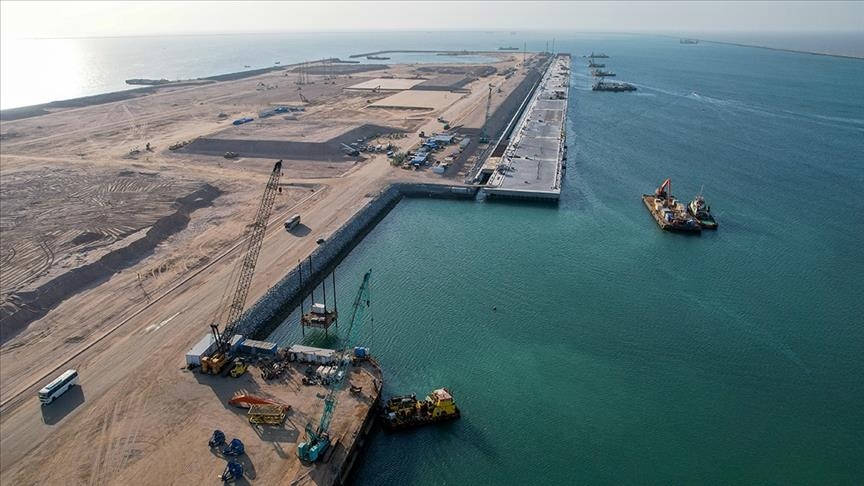
1-Kumport Port: The most prominent symbol of the presence of Chinese capital in Türkiye’s infrastructure is the purchase of the Comfort container terminal. In 2015, a consortium consisting of Chinese state-owned giants including COSCO Pacific, China Merchants Holdings International, and China Investment Corporation (CIC Capital) succeeded in acquiring a 65% stake in this strategic port in the Sea of Marmara for a payment of $920 million to $940 million. As Türkiye’s third-largest container terminal, the port allows Beijing not only to have a secure gateway for its goods to enter the Turkish domestic market, but also to directly monitor the flow of goods into Europe and the North African market. In addition, Chinese investors are looking for opportunities to have a presence in the developing ports of Çandarlı in the Aegean Sea and Mersin in the Mediterranean Sea to connect the maritime silk road strategy with the land road network.
2-Transcontinental and Rail Transport Network: The Turkish government, through a combination of domestic investment and international financing, has put into operation a stunning chain of modern infrastructure, all of which serve to facilitate transit in the Middle Corridor. The completion of iconic projects such as the Marmaray undersea tunnel connecting Asia and Europe under the Bosphorus Strait, the Yavuz Sultan Selim Suspension Bridge, the Eurasia Tunnel, the Grand Istanbul Airport, and the 1915 Çanakkale Bridge have formed the lifeblood of this corridor. In the rail sector, development projects are proceeding at a rapid pace. The Edirne-Kars high-speed railway and the vital Halkalı-Kapıkule project, which is being built with the financial support of the European Union with 275 million euros and loans from the European Bank for Reconstruction and Development (EBRD) and the Asian Infrastructure Investment Bank (AIIB), will ensure the connection of Türkiye’s railway network to the Trans-European Network (TEN-T) in Bulgaria. Türkiye is also pursuing the INRAIL project to create a 24-hour, uninterrupted rail connection for freight trains through Istanbul to remove traffic bottlenecks.
3-Planned freight trains to be put into operation: As a result of these plans, in July 2025, several freight trains will start operating directly from the industrial cities of Chongqing and Chengdu in China and, after traveling 3,500 kilometers in China and passing through intermediary countries and the Caspian Sea, will arrive at Istanbul’s Halkalı station in an unprecedented time of 22 days. This event marks the beginning of regular, scheduled, and sustainable rail services between China and Türkiye.
Trans-Caspian Network Development and Structural Influence in the Caucasus and Central Asia
To create integration in the Middle Corridor, investment in Türkiye alone was not enough, and Beijing needed to address the bottlenecks in the Caspian and Caucasus transit countries through infrastructure diplomacy. Kazakhstan: Transit Hub and Source of Vital Minerals As the largest landlocked country and the initial entry point of the Middle Corridor, Kazakhstan plays a strategic role. The Chinese government has made heavy investments in the country through strategic agreements on the sidelines of the China-Central Asia Summit in May 2023 and subsequently in October 2024.
In the Caspian Sea ports sector, Kazakhstan National Railways (KTZ) and China’s Lianyungang Port Group have jointly invested in a new, state-of-the-art container hub in the port of Aktau to speed up operations and prevent ship loading congestion. Kazakhstan has also accelerated the modernization of multimodal infrastructure at the port of Kuryk.
In the area of rail network development, the signing of an agreement to build the vital Tacheng-Ayagoz railway line and establish a third rail border checkpoint between the two countries is a major step towards facilitating trade. The project is expected to increase the annual rail transport capacity between China and Kazakhstan from 28 million tons to 48 million tons.
It should also be noted that geoeconomic competition in the region is not limited to China. The importance of the Middle Corridor has led Central Asian countries to use this route to export vital minerals directly to Western markets. The $1.1 billion investment by the American company Cove Capital Group, in cooperation with American financial institutions, to extract and process a huge tungsten mine in Kazakhstan is an example of this competition for strategic resources, which, using the Middle Corridor, eliminates dependence on transit through Chinese and Russian territory. Georgia: The Anaklia Port Conundrum and the Black Sea Gateway As the only current route connecting the Caucasus Corridor to the Black Sea and Europe, Georgian ports (Poti and Batumi) were severely lacking in capacity and aging infrastructure. The key to solving this bottleneck was the construction of the deep-water port of Anaklia.
The construction of this port, which had been stalled for years due to hidden political pressures from the Russian Federation and conflicts in Georgia’s domestic politics, and Western investors had withdrawn from it, was finally awarded to a Chinese consortium (the state-owned CCCC Group and Singaporean partners). Negotiations to finalize the contract are scheduled for the end of 2026, with the operational phase targeted for 2029. Once completed, the megaport will add an annual capacity of 50 million tons of cargo and 2 million standard containers (TEUs) to the Middle Corridor. The handover of this vital project to entities controlled by the Chinese Communist Party has met with strong reactions from US officials and senators (including members of the Helsinki Commission), as this move is seen as a deep and undisputed Chinese influence in the strategic Black Sea region and as a weakening of Georgia’s democratic orientation. Republic of Azerbaijan: Completing the railway backbone of Azerbaijan as a link and bridge between the Caspian Sea and Georgia, in July 2024, on the sidelines of the Shanghai Cooperation Organization (SCO) summit, Azerbaijan signed a comprehensive strategic partnership agreement with China, focusing on the sustainable development of the Middle Corridor.
The most important infrastructure achievement of this cooperation is the significant upgrade of the Baku-Tbilisi-Kars (BTK) railway. After years of capital allocation and continuous reconstruction, the BTK railway line was inaugurated on June 2, 2026, in the presence of high-ranking officials of the countries involved and at full capacity. Starting from the capital of Azerbaijan, passing through Tbilisi and reaching Akhalkalaki station, the line changes gauge and finally reaches the city of Kars in northeastern Türkiye, and is considered the backbone of Eurasian connectivity. The Azerbaijani government has made huge logistical and engineering investments to modernize the 184 km of this line, which is located in Georgian territory and passes through difficult and mountainous areas at an altitude of 2,400 meters above sea level. During the project, 13 passenger and freight stations, 55 durable bridges, 8 power substations and more than 320 engineering structures were reconstructed or built. With this upgrade, the cargo capacity of this line increased fivefold, from 1 million tons to 5 million tons of goods and one million passengers per year, which has reduced the transit time of goods from China to Europe to about 15 days.
Table 2. Key Infrastructure Projects of the Middle Corridor
| Project | Geographical Location | Main Participants | Development Goals & Capacity | Operational Status (2026) |
| Tacheng-Ayagoz Railway | China-Kazakhstan Border | Governments of China and Kazakhstan | Upgrading rail capacity from 28 to 48 million tons annually | Under construction and development |
| Aktau Port Container Hub | Kazakhstan (Caspian Sea) | Lianyungang Port Group / KTZ | Maritime traffic management and accelerating container loading | Under implementation and equipping |
| Strategic BTK Railway | Azerbaijan-Georgia-Türkiye | Government of Azerbaijan (Utilized by China and Europe) | Transporting 5 million tons of cargo and reducing transit time | Fully operational in June 2026 |
| Anaklia Deep Sea Port | Georgia (Black Sea Coast) | Chinese Consortium (CCCC State Group) | Adding capacity of 50 million tons and 2 million TEUs | Expected to be operational in 2029 |
| Kumport Container Terminal | Türkiye (Sea of Marmara) | COSCO / China Merchants / CIC | Gateway to Europe with 65% Chinese shareholding | Active under the management of Chinese entities |
Structural Vulnerabilities, Climate Constraints, and Security Risks
Despite the exponential growth of freight traffic and the undeniable geoeconomic importance of the Middle Corridor, the route continues to struggle with fundamental and multi-layered limitations and vulnerabilities, the careful analysis of which is essential to present a realistic and scientific picture.
1- Scale and Capacity Limitations Against Competitors
The most important inherent challenge of the Middle Corridor is the lack of “volumetric scale” commensurate with the global economy. Although the capacity of the BTK railway network has been increased to 5 million tons per year with great efforts, the total operational capacity of the Middle Corridor currently accounts for only about 6% of the 100 million tons annual capacity of the Northern Corridor (Russian Railways). Although this route has been able to act as a strategic insurance policy during the crises of 2026 and keep the flow of vital goods open, attracting and directing the full flow of trade between the giant economies of China and the European Union will require tens of billions of dollars of continuous investment, regulatory integration, and expansion of the transit fleet in the coming decades.
2- Environmental catastrophe: The deadly retreat of the Caspian Sea
Beyond political variables, perhaps the most critical physical and existential threat to the functioning of the Middle Corridor is the climate crisis. The Caspian Sea is drying up and retreating at an alarming rate. Extensive damming and regulation of the Volga River flow by the Russian Federation (a river that supplies about 80 percent of the water entering the lake), along with rising global ocean temperatures and intensified evaporation, have caused the Caspian Sea water level to drop by an average of 30 centimeters annually.
The northeastern part of the sea, located in Kazakhstan and home to the vital ports of Aktau and Kuryk, is the shallowest part of the Caspian and is therefore the most affected by this ecological phenomenon. Statistics show that between 2001 and 2022, the coastline in this area has retreated 37.25 km inland and its water area has decreased by 39%. This sharp drop in water level has already caused a 22% reduction in the capacity of Ro-Ro ships to carry wagons and a 10% disruption in the movement of rail tankers on the Baku-Kuryk route. While countries in the region have resorted to continuous dredging as a temporary solution, scientific predictions indicate a drop in water levels of 9 to 18 meters by the end of the 21st century; A scenario that could completely landlock Kazakhstan’s ports and force these countries to spend billions of dollars on building deep-water offshore terminals.
3-Geopolitical risks of alternative routes and security risks of the TRIPP project
Logistical obstacles and delays in the development of Georgia’s infrastructure (such as the slowdown in the construction of the Anaklia port) have led the United States and Western powers to support an alternative land route in the South Caucasus region by 2025. The ambitious project, dubbed the “Trump Path for International Peace and Prosperity” (TRIPP), involves the construction of a 43-kilometer railway line from the Meghri region in southern Armenia at a cost of $250-400 million. The aim of the route is to completely bypass Georgia and Russia and create a direct connection between the main territory of Azerbaijan and the Nakhchivan outpost, and then extend it into Turkish territory.
To overcome Armenia’s strong sovereign sensitivities to losing control of the crossing, a specific management model called “Front Office-Back Office” has been developed by Western planners, in which sovereignty, physical security, and support remain with the Armenian government, but third-party private operators provide transit and navigation services to meet Baku’s demand for “unimpeded access.” The implementation of this plan would also mean the repeal and replacement of the provisions of the November 2020 agreement, which had entrusted security control of the route to the Russian Federal Security Service (FSB). However, the TRIPP project has a fatal geoeconomic Achilles’ heel: the planned railway in southern Armenia runs exactly along the Aras River and is only 27 miles (about 43 kilometers) from the borders of the Islamic Republic of Iran at its closest point. Given the start of the devastating 2026 war and the aggressive approach of both sides in targeting each other’s related infrastructure, this route is at very high risk of preemptive or retaliatory attacks, and its stability is completely tied to unpredictable variables in Tehran, Washington, and the Middle East security architecture, which severely questions its scalability and reliability.
Second-Order Consequences and the Strategic Outlook of Eurasian Geoeconomy
The convergence of great power interests along the Middle Corridor route and China’s heavy investments in Türkiye and Central Asia reveal deeper truths about the changing paradigm of international political economy:
The changing nature of corridors; from “economic efficiency” to “risk resilience insurance”:
Before 2022, the global logistics strategy and the approach of transportation giants were set exclusively based on the two variables of “lower cost” and “higher speed”. However, with the emergence of hybrid wars in Ukraine, the cessation of traffic in the Red Sea, and finally the blockage of the vital artery of the Strait of Hormuz in 2026, the fundamental logic of the supply chain has changed. As the Turkish Minister of Transport rightly pointed out during the inauguration of the BTK railway, land routes such as the Middle Corridor are no longer just “alternative routes” in times of crisis, but have become a permanent “strategic insurance policy” for the survival of global trade. The high cost of multimodal transportation on the Middle Corridor is now assessed and paid not as an economic loss, but as a “resilience premium” against geopolitical and military shocks.
The growing strategic independence of landlocked Central Asian countries
The importance of finding an alternative to the Middle Corridor has provided Central Asian countries such as Kazakhstan with powerful leverage. These countries, which were previously mere exporters of raw materials (such as ore and energy) to the Chinese and Russian markets in the political economy of the region, are now, aware of the strategic interdependence of the West and the East on their territory for transit, using this geopolitical leverage to attract huge foreign investments to build downstream industries and create domestic value added. This allows them to balance their traditional dependence on Chinese miners and Russian distribution networks.
Beijing and Moscow’s hidden rivalry in the traditional backyard of Eurasia
China’s massive investment in Georgian ports (such as the Anaklia consortium victory), expansion of Kazakhstan’s railway capacity, and upgrading of Baku’s connectivity infrastructure, despite Beijing’s diplomatic silence and caution about avoiding provocations to Russia, indicate a deeper geopolitical ambition. Moscow has clearly pushed for delays in Caucasus projects to prevent a permanent replacement of the Northern Corridor. However, Beijing has already skillfully played the middle corridor terrain, without creating direct military or political tension, expanding its strategic economic dominance over Central Asia and the Caucasus—regions that Russia has always considered its “near abroad”—and has shifted the balance of power in its favor in the long term.
Türkiye’s pivotal role; exercising hegemony through infrastructure diplomacy
Ankara has strategically astutely positioned its territory at the center of gravity and intersection of conflicting interests; on the one hand, it has attracted the big capital of the East (through integration with China’s Belt and Road Initiative), on the other hand, it has benefited from the technical and financial support of the European Union (such as financing Bulgaria’s communication lines), and at the same time it has responded to the transit and independence-seeking needs of the Turkic-speaking countries of Central Asia. The Turkish diplomatic apparatus’s All-of-State strategy attempts to fill the power vacuum caused by Russia’s weakening and Iran’s military conflict in the Middle East by making maximum use of trade and energy leverage, and to extend its structural influence as a continental power to China’s western borders.
Conclusion
The all-out and devastating war of 2026 in the Middle East and the imposition of a naval blockade on strategic energy and trade corridors were only a powerful catalyst to accelerate and make inevitable the trends that had been showing signs of their emergence since the beginning of this decade. The Middle Corridor (TITR), with all its logistical challenges and bottlenecks such as frequent unloading and loading, ecological crises such as the retreat of the Caspian Sea, and the limited capacity of its transit fleet compared to its northern counterpart, is no longer a conceptual plan on paper within the framework of the grand “Belt and Road” initiative; it is an irreplaceable respiratory artery that ensures the continuation of the economic and industrial life link of the beating heart of Asia with the European consumer markets in an era of instability.
Beijing’s heavy, targeted, multi-billion dollar investments in developing Caspian Sea ports, strengthening strategic Caucasus railways such as the BTK, and acquiring Turkish port terminals and rail networks indicate a strategic maturity in China’s foreign policy; a policy that has evolved from initial passivity and caution to avoid provoking Russia, towards creating and consolidating a resilient corridor against sanctions shocks and regional wars. At the same time, the Republic of Türkiye’s smart positioning as the unrivaled hub of this multifaceted network and its connection to European road and rail networks has given Ankara unprecedented power in shaping the Eurasian geoeconomic order.
The survival, development, and long-term effectiveness of the Middle Corridor in the coming decades will not only depend on the speed of capital injection and physical infrastructure development; Rather, it will fundamentally depend on the extent to which the governments along the route coordinate diplomatically to remove software and customs barriers, intelligently manage geopolitical tensions, and find innovative technological solutions to overcome the challenges of climate change. In a macro assessment, today’s Middle Corridor is a tangible manifestation of the global economy’s struggle to survive, adapt, and reinvent itself in an era of resurgent geopolitics, multipolar conflicts, and increasing militarization on the world’s strategic highways.
Photograph: Anadolu Agency