


Definitions & Interpretations of Foreign Policies
Explanation of Monroe 2.0
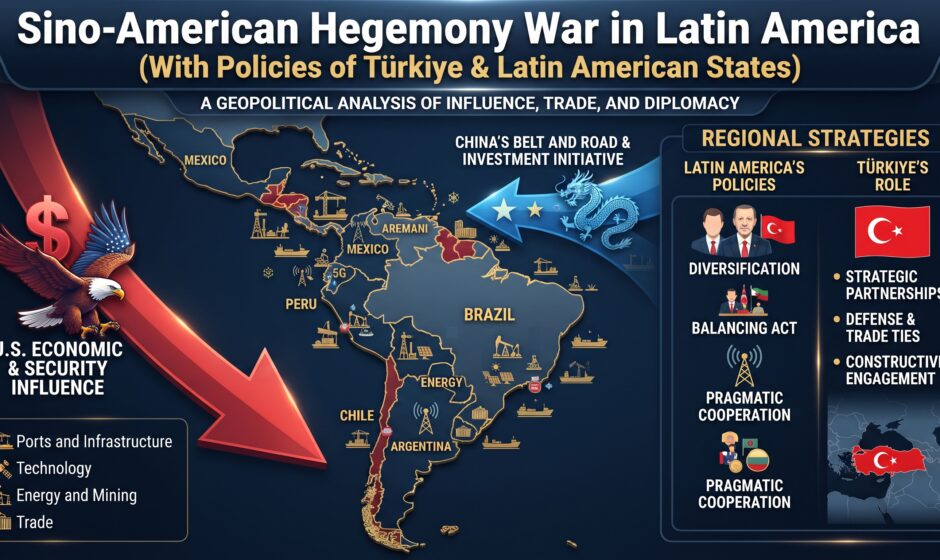
Monroe Doctrine, founded by James Monroe was an idea which evolved throughout centuries to keep the Americas free & isolated from European intervention under US leadership. On the surface, it designed & evolved to; create a closed continental market, improve security relations, integrate Latin States to the American dollar & financial system, defend democracy & law norms.
Monroe 2.0 (a.k.a. Neo-Monroeism), revived by Donald Trump, refers to outcasting/excluding powers such as the Russian Federation and the PRC from Western market & political circle, re-arranged measures in US policy in Latin America + Northern America & right-wing/liberal Latin States improving their relations with US again (Argentina as an example).
But in both, intentions changed this nature:
In Monroe 1.0, US interest in Cold War damaged the doctrine’s perception; scarred trust issues caused by interventions on Latin State’s political structure & governmental organisation via operations & coups, asymmetrical relations, dependency orientation by creating “Banana Republics & Backyard Mentality”.
In Monroe 2.0, Trump’s aggressive policy toward Venezuela has again damaged the idea of Monroe. However, due to the PRC’s economic policies, we cannot talk about total abandonment.
Explanation of Belt and Road Initiative
Belt and Road Initiative offers Latin American nations vital patient financing that directly addresses the region’s long-lasting infrastructure problem. By providing a major market for primary commodities (such as soybeans, copper, and lithium), the PRC serves as a new economic alternative to the West, enabling regional states to diversify their global economic partnerships with fewer political conditions.
However, deep integration into the Belt and Road Initiative exposes the region to significant structural risks, including debt burdens and a commodity export dependency that damages local industry. Furthermore, limited technology transfer, minimal local job creation & noticeable environmental costs, combined with the growing danger of being dragged into US the PRC geopolitical tensions, present serious long-term challenges for Latin American autonomy.
Explanation & Causes in a Nutshell
- Political & Monetary rivalry (the PRC’s effort to gain presence while the USA interprets it as a security perimeter invasion)(Yuan vs Dollar)
- Creating new market relations for the PRC
- Using natural resources (petroleum, minerals, cash crops…) of Latin American States such as Lithium Triangle States (Chile, Bolivia & Argentina).
Latin State’s Point of View
Even though Monroe Doctrine 2.0 is affecting Latin America via governance & trade mechanisms of Latin America right now, due to historical events related to the USA & a new chance to develop outside western sphere, we can see it is losing efficiency (except right-wing states such as Argentina/Milei)
The same can be said for the Belt and Road Initiative. Even though Belt and Road Initiative contributes to the rise of Latin American economy & presence in the world (Nicaragua, Peru & Chile as examples), the PRC’s High Interest Rate – Short Term payment policy becomes a threat of economic dependency, preventing from full alignment with the PRC.
Türkiye’s Position
Türkiye’s main objective is, beyond the clash of Monroe-Belt and Road Initiative in the area, to improve ties between Latin American States by remaining independent & versatile. Over the last decade, Türkiye has been focusing on “Global South” more than North. Two main reasons for these are:
- To counter the negative attributions sought to be imposed by the states trying to outcast Türkiye from world politics.
- To establish roots in a developing states & markets as an alternative.
Recent “Türkiye-Bolivia Inter-Parliamentary Friendship Group Meeting” to strengthen relations between two states via soft-power element is proof that Türkiye will continue to expand its orientation without being a part of larger diplomatic conflicts.
Conclusion
I believe, when calculated, the only logical (short term + long term gain) approach is maintaining trade diversification (such as regional integration, local processing of lithium, or technology-transfer requirements) since relying on either power means dependency, a damage to regional autonomy & possibility of becoming backyard states again. Main goals of most of the Latin American policymakers are preventing domestic development goals from being collateral damage in superpower competition & not multiplying dependency. In practice, Latin American states already pursue diversification: Chile and Peru hold free trade agreements with both the US and the PRC, while Brazil trades heavily with both powers and remains a BRICS member. Even Milei’s US-aligned Argentina has kept its currency swap line & trade partnership with the PRC, which shows that most governments choose pragmatic hedging over exclusive alignment.