

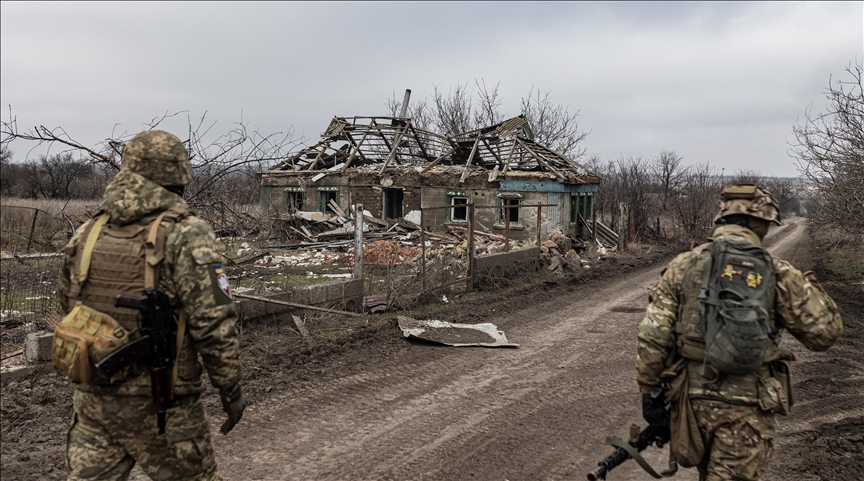

The war that began with Russia’s invasion of Ukraine on 24 February 2022 has evolved into a conflict that is on the verge of entering its fourth year. Although there have been attempts at peace talks since the outset of the war, the inability of Ukraine and Russia to reach common ground has been one of the main factors obstructing the process.
When examining the Russia–Ukraine war, it would be misleading to describe it solely as a conventional frontline conflict. Military strategies have been deeply intertwined with attritional warfare aimed at wearing down the opposing side. The most evident examples of this approach have been attacks on energy infrastructure and ports, which clearly demonstrate that the war is being conducted as a comprehensive war of attrition.
In particular, Russia’s transformation of winter into a strategic weapon became more pronounced after Ukraine targeted the Kerch Bridge. When Russia encountered stagnation on the front lines, it adopted a different military strategy by beginning to target Ukraine’s energy grid. This approach was designed to undermine public morale in Ukraine. By 2024, Ukraine shifted from a defensive posture to launching offensive operations against Russia, which in turn prompted retaliatory actions such as attacks on Russian refineries and vessels in the Black Sea believed to be part of the so-called “shadow fleet.” While Russia’s objective was to weaken Ukraine from within, the initiation of Ukrainian counterattacks resulted in significant damage inside Russia, placing its trade under increased risk.
From that point onward, the course of the war transformed into a pattern of mutual retaliatory strikes. The frontline has largely become stalled, characterized by limited Russian advances and Ukrainian counter-pushes in certain areas.
A particularly noteworthy aspect of Russia’s attacks on Ukraine is the deliberate targeting of energy networks with the aim of leaving the country without power during the winter months. In recent periods, Russia has struck critical infrastructure facilities using drones and missile attacks. These air assaults led Ukraine to declare a state of emergency in the energy sector. In Kyiv, so-called “Points of Invincibility” were established to provide civilians with places to endure nighttime hours. This development can be seen as an official manifestation of Russia’s effort to fully draw Ukraine into a war of attrition.
Under normal circumstances, Ukraine had called on its allies to provide air defense systems to protect critical energy facilities ahead of the winter season. However, delays have occurred, particularly because continuous attacks rapidly deplete available munitions. Within this context, Ukrainian President Volodymyr Zelensky emphasized the need for European countries to deliver air defense ammunition more rapidly and to strengthen defensive systems. These delays have enabled Russia to intensify its air attacks, leaving Ukraine’s critical energy networks as direct and exposed targets. According to official figures, over the past year Russia carried out more than 100,000 drone attacks, over 60,000 guided aerial bomb strikes, and approximately 2,400 missile attacks against energy infrastructure. Ukrainian Commander-in-Chief Oleksandr Syrskyi stated that, as of 2026, Russia plans to conduct up to 1,000 drone attacks per day. This clearly indicates that Russia has identified vulnerabilities in Ukraine’s air defense systems.
Ukrainian President Volodymyr Zelensky has stated that, in addition to Russia’s ongoing air strikes, Russia is planning potential attacks on nuclear power plants. Russia’s air strikes have already severely damaged Ukraine’s energy infrastructure; the allegation that Russia is considering such plans would amount to an attempt to force Ukraine into complete submission. Currently, the Zaporizhzhia Nuclear Power Plant, which is of vital importance for Ukraine’s energy supply, remains under Russian occupation, and Russian military units continue to be stationed there. By doing so, Russia also shields itself from Ukrainian air strikes, effectively using the plant as a protective shield. This nuclear power plant constitutes one of the major fault lines in peace negotiations and is extremely significant for Ukraine. The United States has proposed that the plant be managed by a joint consortium within the framework of peace talks; however, Ukraine rejects this proposal, as it considers the issue a matter of energy sovereignty. At present, the plant has turned into a serious threat while remaining under Russian control.
Russia has also used its medium-range ballistic missile, Oreshnik, in retaliatory strikes against critical infrastructure targets. This missile poses a serious challenge for air defense systems, as it descends at a speed of approximately 13,000 km per hour, making interception extremely difficult due to its high velocity and steep trajectory. Its previous use in attacks on Dnipro suggests that Russia may employ this ballistic missile more frequently in Ukraine, further complicating the protection of critical infrastructure facilities.
In response to these attacks on its infrastructure, Ukraine has targeted Russia’s energy infrastructure. Oil terminals in Crimea have been struck, and two months ago Ukrainian drones targeted the Sheskharis oil terminal in Novorossiysk, one of Russia’s most important oil export ports on the Black Sea. This port is a critical hub for Russia’s Black Sea logistics and energy infrastructure. Ukraine’s attack on this location is significant in terms of demonstrating its retaliatory capacity. Beyond this, Ukraine has repeatedly struck Russian oil refineries and petrochemical facilities, not for the first time, leading to reductions in Russia’s oil and gas revenues. These attacks have shown continuity rather than being isolated incidents.
On the first day of 2026, Ukraine targeted the Tuapse Oil Refinery in Russia’s Krasnodar region. This attack was particularly significant because the Tuapse refinery is among Russia’s ten largest refineries, with a production capacity of approximately 12 million tons of oil, effectively functioning as a major export engine. The fact that it was the first attack of the year further underscored its symbolic and strategic importance. In addition, oil storage facilities in Russian cities were also struck.
Although Ukraine successfully conducted retaliatory operations against Russia’s critical infrastructure throughout 2025, it continues to face an urgent need for additional air defense munitions to protect its own energy infrastructure, especially in order to endure the winter months. These mutual attacks are likely to continue until a peace process is achieved. Moreover, recent developments—such as the Greenland crisis between the United States and Europe and internal fractures within the European Union—could slow Ukraine’s war-fighting capacity, thereby creating opportunities for Russia.
Ukraine’s strategy, alongside European Union sanctions, is centered on weakening Russia’s military-economic power through drone attacks. However, as emphasized, the timely delivery of aid to Ukraine—particularly during the winter months—remains the most critical factor.
Although peace talks have been widely discussed recently, they appear to be stalled once again. Russia believes that the Greenland issue has created a transatlantic rift and expects Europe’s attention to shift away from Ukraine. Consequently, Russia may intensify its attacks in an effort to advance militarily toward the objectives it set at the beginning of the war. It is increasingly evident that Russia could exploit transatlantic tensions, making the resolution of disputes among allies the most critical priority.
From the U.S. perspective, at a time when the Trump administration is attempting to accelerate peace negotiations, the escalation of attacks is viewed as dangerous and unjustifiable. This assessment reflects Russia’s current stance and, in turn, further slows the negotiation process.
Photograph: Anadolu Agency