


Mohammad Ali Ghanamizadeh Fallahi
Introduction
Under conditions in which the security and economic environment of West Asia is undergoing profound reconfiguration, and geopolitical risk has emerged as a central variable shaping investors’ decision‑making, the assessment of alternative destinations for the relocation and reallocation of capital has acquired strategic importance. In this context, Türkiye—as a middle power situated at the intersection of Europe, Asia, the Black Sea, the Mediterranean, and the wider Persian Gulf neighborhood—possesses a set of geopolitical and geoeconomic capacities that position it as a notable option for attracting a portion of capital from the Gulf states. Türkiye’s principal advantage in this regard does not stem solely from the size of its domestic market or its productive capacity. Rather, it lies primarily in the country’s ability to connect economic spaces, commercial corridors, energy networks, consumer markets, and transit routes. From a geopolitical perspective, Türkiye occupies a position that enables it to function both as a form of strategic depth for regional capital and as a platform for access to extra‑regional markets. Its membership in Western security and economic institutions, extensive linkages with Europe, proximity to the Middle East, connections to the Caucasus and Central Asia, and active presence in both maritime and continental strategic arenas have enabled it to operate as an intermediary actor bridging several distinct geoeconomic domains. This characteristic holds particular significance for Gulf investors, as it allows them without completely departing from a familiar cultural and geographical environment to position part of their assets and economic activities within a setting that offers multilayered access and a broader field of strategic maneuver.
From a geoeconomic perspective, Türkiye also possesses advantages that distinguish it from many regional alternatives. On the one hand, the country benefits from an established industrial infrastructure, a developed banking network, a large consumer market, a skilled labor force, and extensive logistical capacities. On the other hand, through its trade linkages, preferential agreements, maritime and land access, and its position along major international corridors, Türkiye is capable of serving as a hub for the aggregation, direction, and regeneration of capital flows. For Gulf capital, therefore, Türkiye represents not merely an investment destination but also an operational platform for portfolio diversification, the establishment of regional headquarters, supply chain management, the expansion of export-oriented activities, and indirect entry into European and Eurasian markets.
Within this framework, Türkiye’s role as a transit hub assumes particular significance. The country’s location along major East–West and North–South transportation corridors, its active seaports, international airports, extensive highway and railway networks, and its integration with regional energy and trade routes have positioned Türkiye not merely as a destination for investment, but as a logistical and transit node facilitating the circulation of goods, capital, services, and even technology. For the Gulf states—seeking to reduce geopolitical vulnerability and enhance economic resilience—the allocation of part of their capital within such a node can provide both a protective function and operational value added.
Alongside these material factors, the role of civilizational, cultural, and religious linkages should not be overlooked. Islam, in this context, is not merely an identity variable; it can also function as a facilitating factor for convergence, economic trust-building, the reduction of transaction costs, and the strengthening of institutional and social linkages. Cultural and religious affinities between Türkiye and the societies of the Persian Gulf, combined with a historical record of interaction, can provide the necessary soft foundations for the movement of capital, the development of commercial partnerships, the expansion of Islamic finance, and the deepening of cooperative networks between state and private actors. This soft dimension becomes even more significant when investors seek not only economic returns but also an environment characterized by cultural proximity, social adaptability, and the possibility of establishing a long-term presence.
Accordingly, examining Türkiye’s capacity to attract capital from the Gulf states is not merely a narrowly economic question. Rather, it is an issue embedded in the broader reconfiguration of power, security, trade, transit, identity, and regional order. In this context, Türkiye may function simultaneously as an intermediary geopolitical space and a geoeconomic platform capable of addressing part of the Gulf investors’ need for relative security, geographical diversification, market access, and strategic flexibility. For this reason, a rigorous assessment of Türkiye’s capacity to attract and sustain such capital requires a multidimensional and realistic perspective—one that recognizes both Türkiye’s structural advantages and the limitations and conditions that shape the realization of this potential.
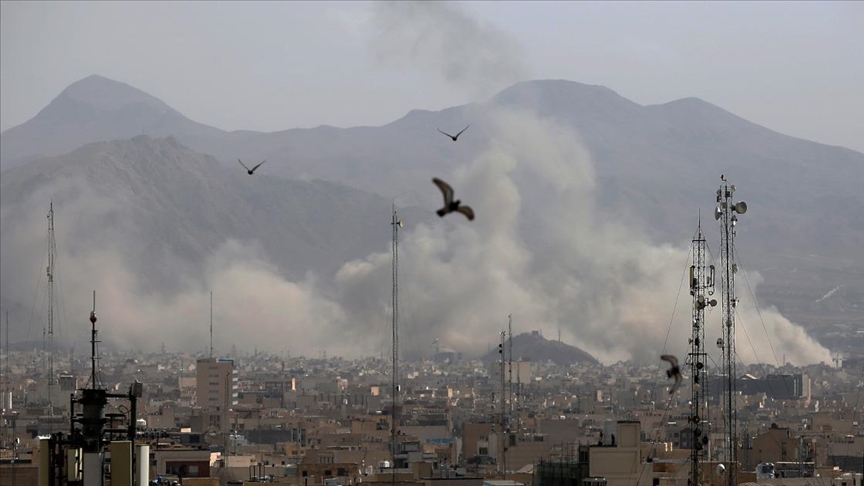
The war that began on 28 February 2026 between Iran and the Israel–U.S. coalition, and which reached a temporary two‑week ceasefire on 8 April 2026, was not merely a security crisis; it evolved into a geoeconomic shock for the entire Middle East and the global energy market. Under such conditions, the principal issue for capital from the Gulf states is not simply exiting the region, but rather reallocating assets toward spaces capable of providing a degree of relative security, market access, and continuity of economic operations. Consequently, any evaluation of Türkiye must be situated within the broader context of the reconfiguration of the geography of capital, disruptions in energy corridors, and the growing risks associated with the concentration of investment within the Persian Gulf. Within this framework, not all capital flows currently in motion share the same character. A portion of these resources consists of conservative, wealth‑preservation capital, whose priorities include legal stability, the depth of financial markets, the international custodial capacity for assets, and institutional predictability. Another segment comprises operational and productive capital seeking regional headquarters, logistical hubs, treasury centers, production bases, or export platforms. Türkiye’s comparative advantage lies primarily in the latter category. More precisely, Türkiye offers considerable capacity for capital oriented toward activity, trade, production, and supply‑chain management; however, for capital seeking merely a secure parking space for wealth, the country still remains at a meaningful distance from leading global financial centers. This distinction constitutes the analytical core of the entire report.
Structural Advantages of Türkiye in Attracting Capital from the Gulf States
One of Türkiye’s principal advantages lies in its geopolitical and geoeconomic position as an intermediary economy. The U.S. Department of State, in its 2025 Investment Climate Report, emphasizes that Türkiye’s strategic location, large domestic market, relatively young population, skilled labor force, and customs union with the European Union constitute key factors enhancing the country’s investment attractiveness. The report also notes that, in general, there are no broad restrictions on foreign ownership or control, and that Türkiye’s foreign investment regime does not fundamentally discriminate between domestic and foreign investors. This indicates that, from both a legal and geographical standpoint, Türkiye is not merely a national economy but a regional platform connecting Gulf capital to Europe, the Caucasus, Central Asia, and the Eastern Mediterranean. In practice, Türkiye has increasingly evolved into a hub for the connection and management of transit flows and foreign investment, particularly capital originating from Europe and China. This capacity has reinforced Türkiye’s position as a country with significant potential for attracting investment from the Gulf states.
Another important advantage lies in Türkiye’s logistical and transit capacity. According to official data released in early 2026, Türkiye recorded 247.2 million air passengers in 2025, while its merchandise exports reached 273.4 billion dollars. The official website of the Istanbul Financial Center also emphasizes that from Istanbul, within a four‑hour flight radius, it is possible to access a population of 1.6 billion people, a regional economic size of 30 trillion dollars, and approximately 8 trillion dollars in regional trade. Therefore, Türkiye’s advantage does not lie merely in its ability to receive capital, but in its capacity to connect that capital to networks of trade, transit, distribution, and export. For Gulf capital seeking to reduce geopolitical vulnerability while maintaining regional proximity, this characteristic represents a tangible operational advantage. Moreover, through its strong trade and economic relations with the European Union, Türkiye has made significant progress in the fields of logistics and transit connectivity, customs management and policymaking, and particularly the digitalization of customs procedures, further strengthening its role in corridor connectivity and transit networks.
Another important factor is the existence of a relatively developed ecosystem for attracting and hosting foreign investment. The Investment Office of Türkiye reports that in 2025, foreign direct investment inflows reached 13.1 billion dollars, representing a 12.2 percent increase compared with the previous year. The same source indicates that the majority of incoming investment was concentrated in the wholesale and retail trade, manufacturing, and information and communications sectors, while the number of companies with international capital operating in Türkiye reached 86,926. These figures are significant because they demonstrate that Türkiye is not merely a potential destination at the level of discourse. Rather, it already possesses established and functioning arenas for the attraction of capital, corporate presence, distribution, and production.
Türkiye’s Financial and Institutional Capacities
From a financial perspective, the scale of Türkiye’s banking system constitutes one of the principal pillars supporting the attraction of operational capital. According to the official bulletin of Türkiye’s Banking Regulation and Supervision Agency, total assets of the banking system reached approximately 48.87 trillion Turkish lira in February 2026. Deposits exceeded 28.34 trillion Lira, while the ratio of non‑performing loans stood at 2.59 percent. Such figures indicate that Türkiye possesses significant capacity for financial intermediation, trade finance, fund management, corporate banking services, and the support of regional business operations. For Gulf companies and holding groups seeking to relocate part of their activities, the presence of a large and relatively diversified banking network represents a decisive advantage. In addition, participation banking in Türkiye creates a distinct advantage in engagement with Gulf capital. The Participation Banks Association of Türkiye reported that by September 2025, the assets of this segment had reached 3.86 trillion lira, raising its share of the total banking system to 8.9 percent. This indicator represents more than a numerical statistic. It demonstrates that Türkiye can provide, for a segment of Gulf capital, particularly in the areas of Islamic finance, corporate financing, Sharia‑compliant financial instruments, and familiar banking relationships, an environment that is more adaptable than that offered by many non‑Gulf competitors. This linkage between banking capacity and institutional affinity constitutes one of Türkiye’s distinguishing features compared with many regional economies.
At the institutional level, the Istanbul Financial Center has been designed as a targeted policy initiative. According to its official website, the complex includes 1.3 million square meters of office space and 21 office buildings, alongside a one‑stop administrative window intended to facilitate government procedures for foreign investors, as well as clearly defined tax incentives for cross‑border financial activities. The center also offers specific incentives for treasury units and regional financial management offices that operate in at least three countries. This point is particularly significant because it indicates that, in terms of institutional design, Türkiye’s objective is not merely to attract passive capital. Rather, it seeks to position itself as a base for treasury management, regional headquarters, and financial operations of multinational companies. This is precisely the domain that overlaps most strongly with a segment of Gulf capital.
Structural Limitations and Risks in Attracting Capital
Despite the aforementioned advantages, Türkiye’s most significant constraint remains at the macroeconomic level. Official data from TurkStat indicate that annual inflation in March 2026 stood at 30.87 percent, while annual economic growth in the fourth quarter of 2025 was recorded at 3.4 percent. The Central Bank of the Republic of Türkiye also maintained its policy rate at 37 percent in its decision of 12 March 2026. At the same time, the International Monetary Fund, in its 2025 Article IV Consultation report, notes that although progress has been made in reducing inflation, the disinflation process remains gradual and accompanied by risks. In addition, the Central Bank of Türkiye announced that official reserve assets declined by 12.5 percent, reaching 155.3 billion dollars in the week ending 27 March 2026.
For foreign investors, the practical implication of these figures is clear. Türkiye offers attractive returns and investment opportunities, yet it has not fully achieved the level of currency stability and macroeconomic predictability associated with a classical safe haven for capital.
Alongside macroeconomic risk, institutional risk also persists. The U.S. Department of State’s 2025 Investment Climate Report, while highlighting Türkiye’s structural advantages, explicitly notes that opaque regulatory practices and less predictable legislative processes, particularly during 2024, created certain risks for investors. This issue is highly significant because in attracting large cross‑border capital flows, the quality of institutions and the predictability of rules often matter more than tax incentives. Consequently, some foreign capital may choose Türkiye as a base for operations and trade, while preferring jurisdictions with stronger institutional stability for long‑term wealth preservation.
Another constraining factor is sanctions‑compliance risk and the associated costs of international due diligence. The Office of Foreign Assets Control continues to maintain the Iran sanctions program, and the U.S. Department of the Treasury in March 2026 once again targeted networks linked to Iranian oil sales, the shadow fleet, and missile procurement. In such an environment, any country that is geographically and commercially proximate to Iran must incur greater costs in compliance, transaction transparency, risk screening, and reputational protection in order to host highly sensitive international capital. This limitation does not imply an absence of capacity on Türkiye’s part, but it does reduce the ceiling for attracting the most risk‑averse forms of capital.
Assessment of Investment Attraction Capacity in Türkiye
| Type of Capital | Absorptive Capacity | Basis of Advantage | Main Constraint |
| Corporate operational capital and regional headquarters | High | Geographic position, integration with Europe, large banking system, Istanbul Financial Center, transit hub role | Currency risk and policy unpredictability |
| Manufacturing and export‑oriented capital | High | Industrial infrastructure, market access, export capacity, logistics and transportation networks | Inflation, cost of financing, and exchange‑rate volatility |
| Islamic finance and regional treasury capital | Medium to High | Participation banking, institutional compatibility with Gulf capital, IFC incentives | Relatively limited financial market depth compared to global centers |
| Real estate, tourism, and service-sector capital | Medium | Domestic market size, extensive tourism sector, regional demand | Macroeconomic volatility, liquidity risk, and sensitivity to domestic cycles |
| Wealth‑preservation capital, family offices, and asset‑parking capital | Low | Certain residency advantages and regional accessibility | Institutional gap with Singapore, shallower financial markets, compliance risks, and rule‑of‑law concerns |
Türkiye possesses substantial and defensible capacity for working capital, meaning capital that seeks to establish regional headquarters, commercial operations, supply chains, production facilities, distribution networks, or regional financial management structures. This capacity is closely linked to the scale of the Turkish economy and its logistical position at the intersection of Europe, the Middle East, the Caucasus, and Central Asia. According to TurkStat, Türkiye’s exports reached approximately 273 billion dollars in 2025, placing the country among the world’s major exporting economies. In addition, data from Invest in Türkiye indicate that by 2025 more than 86,000 companies with foreign capital were operating in the country, reflecting the presence of a well-established operational ecosystem for international business activity. From the perspective of connectivity, Türkiye also enjoys a structural advantage. Within a four hours flight radius, firms based in Türkiye can access markets that include more than 1.6 billion people and roughly 25 trillion dollars in combined GDP, a factor that significantly strengthens the country’s role as a platform for regional operations. At the financial level, Türkiye’s banking system, whose assets amount to roughly 48 to 50 trillion Turkish lira, ranks among the largest banking systems in emerging markets. At the same time, the participation banking sector in Islamic finance, which accounts for nearly 9 percent of total banking assets, provides an institutional framework that is particularly compatible with the needs of investors from the Gulf region.
Nevertheless, for ultra conservative capital whose primary objective is the long-term preservation of wealth in a jurisdiction characterized by maximum legal, monetary, and institutional stability, Türkiye’s advantages remain more limited. Indicators such as the Rule of Law Index, the relatively shallower depth of domestic financial markets, and persistent macroeconomic volatility, including elevated inflation and exchange rate fluctuations in recent years, suggest that Türkiye still maintains a measurable distance from the world’s established wealth management hubs. Consequently, under current conditions, Türkiye can more accurately be described as an operating safe haven for active and regionally deployed capital rather than a wealth safe haven, which is primarily designed for the long-term preservation and parking of global assets.
Türkiye as the “Singapore of West Asia”?
Singapore has increasingly been recognized in recent years as one of the world’s premier destinations for investment capital. The principal gap between Türkiye and Singapore, however, lies at the institutional and financial level rather than merely in the realm of tax incentives. In the 2025 Rule of Law Index, Singapore ranked 16th out of 143 countries, whereas Türkiye ranked 118th. Similarly, in the Global Financial Centers Index (GFCI 39) published on 26 March 2026, Singapore holds the 4th position globally, while Istanbul is ranked 101st. Differences are also evident in capital market depth. According to the World Federation of Exchanges statistics for March 2026, the market capitalization of the Singapore Exchange stood at approximately $888.9 billion, while the Borsa Istanbul market capitalization was around $468.2 billion. These gaps carry a clear implication: Türkiye represents a serious option for active and regionally oriented capital, but for capital whose primary priorities are legal security, deep financial markets, and a globally recognized financial brand, it has not yet achieved the position occupied by centers such as Singapore.
In addition, Singapore has developed a formal and targeted ecosystem for family offices and wealth domiciliation. The Singapore Economic Development Board has issued dedicated official guidance for establishing family offices, and on its Global Business Families platform it emphasizes the presence of a growing community of family offices, an extensive network of professional partners, and strong access to Asian investment opportunities. This indicates that Singapore is not merely a deep financial market; it functions as an institutional machine for attracting and retaining international wealth.
By contrast, although Türkiye—through the Istanbul Financial Center—has created tangible advantages for regional headquarters and treasury centers, it has not yet reached a comparable level of institutional maturity in the ecosystem of wealth preservation and family offices. Consequently, Türkiye’s relationship with Singapore is better understood as complementary rather than substitutive. It should also be noted that Türkiye’s financial, investment, and managerial systems are highly dynamic and adaptive, continually moving toward alignment with the managerial practices of leading countries that specialize in facilitating and attracting foreign investment. Moreover, Türkiye’s dynamic and multi‑vector foreign policy often described as a pendulum‑like strategic posture has tended to position the country in a way that minimizes the degree to which it is directly affected by regional and global conflicts.
Türkiye’s Defense and Security Cooperation Capacity and Its Impact on the Reconfiguration of Gulf Capital
Another driver behind the inflow of Arab capital into Türkiye is the linkage between defense and security cooperation and the direction of capital flows. In the environment following the February 2026 war, the issue for the Arab states of the Persian Gulf is not merely the selection of an alternative financial destination. Rather, it involves choosing partners capable of simultaneously playing complementary or substitute roles across three domains: security, technology, and economics. Within this framework, Türkiye possesses an advantage that many regional competitors lack. The country can simultaneously function as a defense and industrial partner, a transit and operational hub, and a destination for a portion of strategic and corporate capital. Consequently, Türkiye’s defense cooperation with certain Gulf states should not be viewed solely as a military matter. Instead, it should be understood as part of a broader geopolitical and geoeconomic chain that may lead to capital relocation, joint production, investment funds, and long-term institutional linkages.
In the case of Qatar, it is analytically accurate to speak of a deep, institutionalized, and strategic defense partnership. The Turkish Ministry of Foreign Affairs has emphasized that relations between the two countries rest on the framework of the High Strategic Committee, close coordination on regional issues, and multilayered cooperation. During the October 2025 meeting of this mechanism, the two sides once again signed a series of cooperation agreements covering defense, economic, and investment sectors. Furthermore, documents released by Turkish official institutions indicate that recent agreements between the defense industries of Türkiye and Qatar go beyond military cooperation and explicitly emphasize joint investment, collaboration with third countries, research and development, and the deepening of industrial ties. For this reason, in the case of Qatar, the linkage between defense cooperation and capital flows is not merely a theoretical assumption but rather a process that is already taking shape at both the institutional and operational levels.
From a political and normative perspective, relations between Ankara and Doha extend beyond purely tactical cooperation. In analytical literature, part of the closeness between the two countries has been attributed to their convergence around a conservative yet pragmatic interpretation of Sunni political Islam, as well as their support for certain aligned regional actors. however, this issue should be presented cautiously and without oversimplification. Normative and cultural affinities between Türkiye and Qatar, alongside institutional cooperation, have allowed their relationship to evolve beyond short term transactional exchanges into a relatively stable strategic partnership. The relevance of this point for investment dynamics is significant. Long term capital flows, particularly in sectors such as defense, infrastructure, and finance, typically emerge within relationships that are not purely economic but are also supported by political and normative foundations.
In the case of Saudi Arabia, the most precise characterization is that bilateral relations in recent years have been moving toward strategic defense–industrial cooperation. According to reports by the Saudi Press Agency, in July 2023 the Saudi Ministry of Defense and the Turkish Ministry of Defense signed an executive program for defense cooperation, alongside procurement agreements with the Turkish firm Baykar. Subsequently, additional agreements and memoranda were concluded aimed at the localization of drone manufacturing and related systems within Saudi Arabia. This trajectory suggests that Riyadh, at least within part of its defense portfolio, views Türkiye not merely as an equipment supplier but as a potential partner in production, technology transfer, and joint industrialization. This shift is analytically significant for the present discussion, because whenever defense cooperation moves beyond simple procurement and expands into supply chains, joint production, and industrial investment, the likelihood of spillovers into broader economic and financial domains increases substantially.
The February 2026 war has also reinforced this trajectory at both the psychological and strategic levels. The conflict demonstrated to the Arab states of the Persian Gulf that even with access to Western defense systems and American security guarantees, their energy infrastructure, ports, airports, and major urban centers remain vulnerable to combined missile and drone attacks. Reporting by the Associated Press indicates that the United Arab Emirates intercepted hundreds of missiles and cruise projectiles as well as more than two thousand drones, while some energy and electricity infrastructure across Gulf states nevertheless sustained damage. The analytical conclusion from this episode is not that Western systems proved entirely ineffective. Rather, the war revealed their practical limitations when confronted with saturation, attritional, and multi layered attack patterns. Consequently, it is plausible that in the coming years some Gulf governments will move toward diversifying their defense partners, with Türkiye emerging as a potentially prominent complementary partner—or in certain niches, even a substitute supplier.
Türkiye’s capacity in this domain is not merely a function of its geopolitical positioning; it is also rooted in the substantial growth of its defense industry. Turkish defense exports exceeded 8 billion dollars in 2025, and the country has become a significant actor in areas such as unmanned aerial vehicles, precision munitions, defense electronics, naval systems, and certain combat platforms. One of Türkiye’s key advantages for Gulf governments lies in the structure of its cooperation model. Rather than relying solely on equipment sales, Ankara typically integrates its defense partnerships with training, maintenance, technology transfer, joint production, and localization initiatives. This approach holds particular strategic appeal for states such as Saudi Arabia, which are actively pursuing the development of domestic industrial capabilities. Accordingly, if Gulf governments seek to reduce exclusive dependence on Western suppliers, Türkiye stands out as one of the few actors capable of offering a relatively comprehensive and regionally embedded defense–industrial package.
The geoeconomic implications of this transformation are substantial. Defense cooperation often acts as a catalyst for broader investment and economic linkages. The experience of Qatar illustrates how defense, investment, transit, trade, and even cooperation in third countries can evolve as components of a single strategic package. In the Saudi case as well, if defense–industrial cooperation with Türkiye deepens, it may lead to direct investment in Turkish industries, participation in joint projects, the expansion of bilateral investment funds, and stronger commercial and financial ties. From this perspective, defense partnership can function as a trust generating variable—a factor that convinces investors that a country is not merely a transactional supplier but a long term strategic partner.
If a scenario emerges in which Qatar and Saudi Arabia deepen both investment and strategic cooperation with Türkiye, it is also conceivable that the United Arab Emirates and Bahrain may direct a portion of their capital toward Türkiye. This proposition should not be framed as deterministic or mechanical, yet from the standpoint of regional behavioral patterns, it remains analytically defensible. In recent years, the UAE has moved toward extensive economic and investment partnership with Türkiye, signing a Comprehensive Economic Partnership Agreement and further deepening cooperation in 2024 through the High Strategic Council and multiple sectoral memoranda covering industry, tourism, agriculture, trade, and technology. This indicates that the institutional and economic foundations for Emirati capital flows into Türkiye already exist. Therefore, if Riyadh and Doha begin to position Türkiye more prominently as a security–economic strategic partner, Abu Dhabi may, under the logic of asset diversification and the preservation of its regional competitive position, channel part of its regional or corporate capital toward Türkiye—or at least expand its presence there.
In the case of Bahrain, although the scale of its economy and capital resources is not comparable to that of Saudi Arabia, Qatar, or the United Arab Emirates, it may still hold relevance from the perspective of follow-on behavior and regional alignment. Economic relations between Bahrain and Türkiye already operate through formal institutional mechanisms such as the Joint Economic Committee, and connections have also begun to emerge in areas such as digital economy initiatives and entrepreneurial cooperation.
Accordingly, if within the evolving regional environment Türkiye gradually comes to be viewed as a more credible security–economic node for a segment of Gulf governments, Bahrain may also—following this broader regional realignment—direct a portion of its capital toward Türkiye. Such flows would likely occur on a smaller scale but with meaningful strategic significance, particularly in sectors such as services, technology, financial investment, and certain joint regional projects.
Conclusion
The overall evidence suggests that Türkiye’s real comparative advantage does not lie in claiming to fully replace Singapore, but rather in concentrating on three specific domains: the establishment of regional offices and regional headquarters, the attraction of production-oriented and export-driven capital, and the development of Islamic treasury and financial services for Gulf-based companies and holding groups. If Turkish policymakers intend to capture a larger share of the capital potentially relocating from the Gulf, their priority should be the stabilization of the macroeconomic environment, the reduction of currency uncertainty, the improvement of regulatory quality, the strengthening of the investment one‑stop window, and the enhancement of sanctions‑compliance and reputational safeguards. Otherwise, Türkiye is likely to attract a portion of operational and investment-oriented capital, while the main wave of wealth‑preservation capital will continue to flow toward established financial centers such as Singapore.
In this sense, Türkiye represents an important but asymmetric destination for Gulf capital. From the perspectives of geopolitical positioning, transit connectivity, manufacturing capacity, banking infrastructure, and participation finance, the country possesses considerable potential to attract investment. Nevertheless, unless Türkiye narrows its gap with leading global financial centers in areas such as rule of law, market depth, macroeconomic stability, and wealth management services, it will not become the primary destination for all forms of capital. The most precise conclusion, therefore, is that Türkiye constitutes a strong option for a segment of Gulf capital outflows—but not for all of them.
The 2026 war may trigger not only a reconfiguration of regional security arrangements but also a reordering of economic and investment partnerships. If the Arab states of the Persian Gulf conclude that the future of regional security requires diversification of defense and military technology partners, Türkiye—due to its distinctive combination of defense capabilities, identity linkages, transit geography, and investment platforms—may have a strong opportunity to emerge as one of the principal destinations for a portion of strategic Gulf capital. In such a scenario, defense cooperation and investment flows would not remain separate spheres but would instead reinforce one another. Methodologically, however, it is important to emphasize that this trajectory represents a strong strategic possibility rather than a deterministic outcome, as its realization will depend on factors such as these countries’ relations with the United States, their domestic defense industrialization strategies, the effectiveness of Türkiye’s contract implementation, and the continued presence of relative macroeconomic stability in Türkiye.
Photograph: Anadolu Agency